
Aromatherapy: An Ancient Practice of Self-Discovery and Healing Through Essential Oils
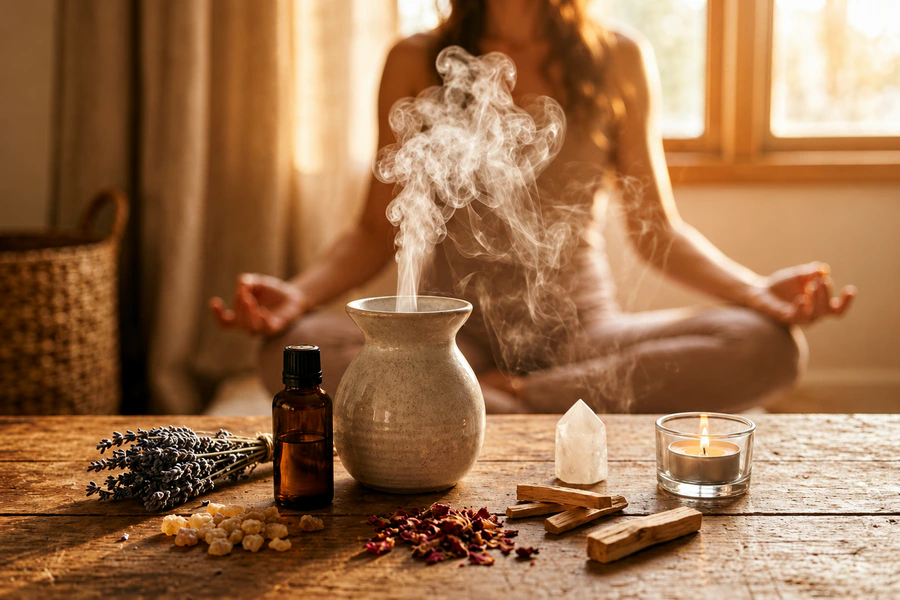
Aromatherapy is not simply a wellness trend — it is an ancient healing practice tested across thousands of years. As someone who walks the path of yoga and Vedic wisdom, I experience essential oils as a subtle instrument of self-discovery, capable of bringing harmony to the body, mind, and inner energy. Today, aromatherapy for health and emotional balance is having a renaissance — yet its roots reach far deeper than most people realise.
The History of Aromatherapy: More Than 5,000 Years of Service to Humanity
The word “aromatherapy” itself is relatively new. It’s coined around 90 years ago in France by chemist and researcher René-Maurice Gattefossé, who studied the therapeutic properties of plant essences. The method was later developed by physician Jean Valnet, whose work brought the therapeutic use of essential oils to wide recognition in the twentieth century.
Yet the use of aromatic plants spans more than 5,000 years. In Vedic traditions, aromatic resins and oils were used to cleanse space, deepen meditation, and support ritual. Ancient Egyptians incorporated fragrant oils into ceremonies, medicine, and body care. The Sumerians left aromatic recipes on clay tablets, while biblical texts make repeated reference to myrrh, frankincense, and other sacred botanicals.
Aromatic plants have always served both physical healing and spiritual practice. In shamanic, Buddhist, and Vedic traditions, plant-based scents helped quiet the mind, deepen concentration, and attune consciousness to higher states of awareness.
The Effectiveness of Modern Aromatherapy
Today, aromatherapy extends far beyond scent-based therapy alone. It has become an integral part of self-discovery, psychology, and holistic health.
Essential oils are used across many areas:
- in spiritual practice — for meditation, pranayama, and cultivating inner stillness,
- in spa and bodywork — for deep relaxation, energy restoration, and rejuvenation,
- in daily life — for creating an atmosphere of calm or vitality,
- in integrative therapy — for emotional healing at a deeper level.
A distinct branch of this field is olfactotherapy — a synthesis of aromatherapy and psychology that works with subconscious responses to scent, gently releasing suppressed emotions and inner blocks.
How to Use Essential Oils Every Day
Despite their ancient origins, the full potential of essential oils is still being uncovered. A well-chosen scent can gently regulate emotional state, energy levels, and mental clarity. Simple ways to begin:
- a few drops in an essential oil diffuser,
- diluted application to the wrists or heart area,
- added to a warm bath,
- inhaled mindfully before meditation or sleep.
Research shows that natural aromas can lower cortisol — the primary stress hormone — and activate the parasympathetic nervous system, which governs rest and recovery.
Which Essential Oils Support Different States

Lavender — promotes relaxation, improves sleep quality, eases anxiety and inner tension.
Lemon — boosts energy, sharpens thinking, helps lift states of apathy.
Frankincense — deepens meditation, supports inner focus and a sense of stillness.
Peppermint — enhances concentration, invigorates, helps with mental fatigue.
Tea tree — supports immunity, purifies air, helpful during colds and congestion.
Eucalyptus — eases breathing, clears congestion, refreshes and energises.
Sweet orange — lifts mood, reduces anxiety, brings a sense of warmth and joy.
Bergamot — stabilises emotional state, helpful with stress and mood fluctuations.
Ylang-ylang — relaxes, eases tension, enhances inner softness and presence.
Rose — harmonises emotional wellbeing, supports the heart, helps process feelings.
Jasmine — builds confidence, awakens inner strength and inspiration.
Sandalwood — grounds, quiets the mind, supports meditation and spiritual practice.
Patchouli — stabilises the psycho-emotional state, helps with anxiety and inner restlessness.
Geranium — balances mood, reduces irritability and emotional fluctuation.
Essential oils are highly concentrated substances — always dilute before applying to skin, avoid contact with eyes and mucous membranes, and consult a specialist if you are pregnant or managing a chronic condition.
Scent in Spiritual Practice and Self-Discovery
Scent works directly on the pranic body — the energetic layer connected to emotions and the quality of the mind. Modern neuroscience confirms what ancient traditions always knew: olfaction is the most primitive of the senses, transmitting signals directly to the limbic brain, bypassing rational analysis entirely.
This is precisely why essential oils can reduce stress and anxiety, deepen meditative states, sharpen focus, harmonise the emotional field, and support physical health. In mindfulness practice, scent becomes an anchor — a reliable way to return to a state of inner harmony.
Aroma Diagnosis: The Path to Personal Harmony
Each person responds to scent in their own way. What brings one person peace may create tension in another. This is why professional aromatherapy uses aroma diagnosis — a method of identifying individual preferences and needs through authentic responses to specific oils.
From this mapping, a personalised essential oil blend is created — one capable of stabilising the psycho-emotional state, improving sleep, raising vitality, and supporting the ongoing journey of self-discovery.
Natural aromatherapy remains one of the most gentle and ecological approaches to maintaining physical health, emotional balance, and spiritual harmony.
When we use essential oils consciously — in meditation, yoga, or daily life — we return to an ancient understanding of the unity between human beings and the natural world. Scent becomes a guide to inner stillness, clarity, and wholeness: a state worth returning to, again and again.
Related Posts
The hidden power of essential oils: aromatherapy as a path to inner harmony
In a world where people increasingly seek answers within themselves, essential oils are becoming not…
How Essential Oils Are Made: From Field to Bottle
The essential oil market is vast — from cheap options in drugstores to bottles with…
How to Choose Essential Oils: A Guide to Making an Informed Choice
The golden rule of aromatherapy is purity. Without it, the therapeutic effect disappears — and…