
How Essential Oils Are Made: From Field to Bottle
The essential oil market is vast — from cheap options in drugstores to bottles with price tags that make you pause. Many people new to aromatherapy reach for the most affordable option — and end up disappointed. Not in the oil itself, but in aromatherapy as a whole. The reason is simple: what they bought was not a real essential oil.
So what actually goes into that small bottle of natural essence — and why can’t a genuine essential oil be cheap?
The True Cost of an Essential Oil: What Drives the Price
There is no single universal method for producing essential oils. Each one has its own story — its own requirements for raw materials, climate, harvest timing, and extraction method. This is what makes every bottle the result of a complex, labour-intensive process. And it is precisely why every essential oil carries its own price.
In broad terms, the journey from plant to oil involves three key stages.
Raw Materials: Mountains of Petals for a Single Drop
The quality of an essential oil is determined from the very first step — the harvest. To fill even a small bottle, producers must process kilograms of petals, leaves, needles, roots, bark, or resin.
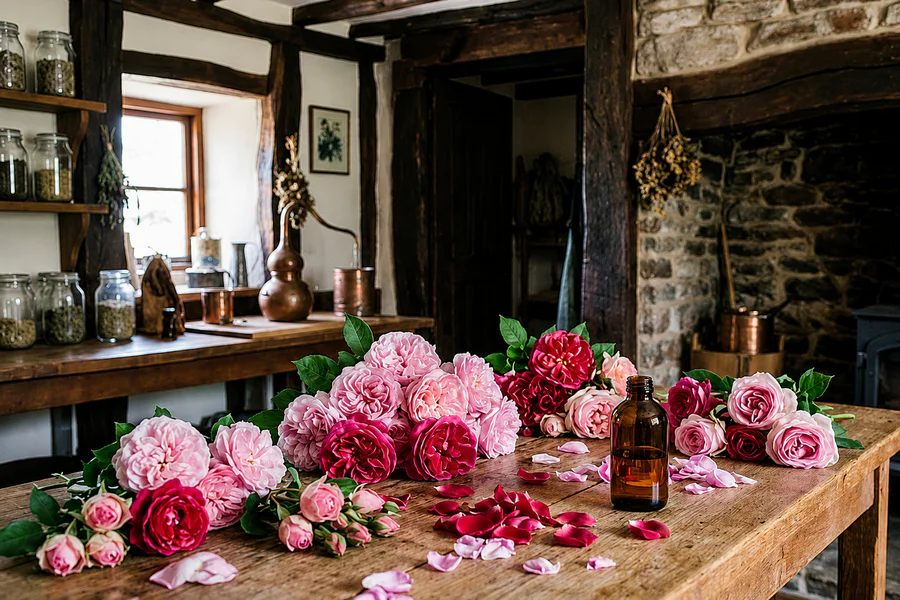
To produce just one litre of Bulgarian rose essential oil — one of the most expensive in the world — it takes between 3.5 and 4 tonnes of fresh petals, hand-picked at dawn when the oil content in the flower is at its peak.
Raw materials are highly perishable. The top leaves of lemon balm, for example, must reach the distillation vessel within two hours of harvesting — otherwise their therapeutic properties simply evaporate. This is why many producers set up distillation equipment directly on the farm, which significantly increases production costs.
Soil composition, the geographic location of plantations, and their distance from industrial zones all matter enormously. The same plant grown in different regions will yield oils with fundamentally different therapeutic profiles. This is why quality essential oils always indicate not just the botanical Latin name of the plant, but also the country of origin.
How Essential Oils Are Extracted
The extraction method directly shapes the therapeutic value of the final oil.
The most accessible method is cold pressing from the peel. This is used for citrus oils — lemon, orange, bergamot, grapefruit. The resulting oil goes through separation to remove excess moisture.
Most essential oils are produced through steam distillation: steam is passed through the raw material at a specific pressure for a precisely controlled period of time. Delicate petals release their phenols almost instantly. Frankincense resin crystals, by contrast, require up to 100 hours of continuous steam processing.
Once cooled, the enriched steam becomes a distillate, which separates into two products: the essential oil itself and the hydrosol — a water-based solution rich in lighter aromatic molecules. Hydrosols — rose water, lavender water, chamomile water — are widely used in natural skincare and cosmetics as a gentler alternative to essential oils.
There is also CO₂ extraction — one of the most advanced and gentle methods available. It preserves the fullest spectrum of biologically active compounds without exposure to high temperatures. CO₂-extracted oils are known for their exceptional aromatic richness and high therapeutic value.
Maintaining quality at every stage requires specialised equipment and automated process control — all of which is naturally reflected in the final price.
Bottling: A Small Detail That Makes a Big Difference
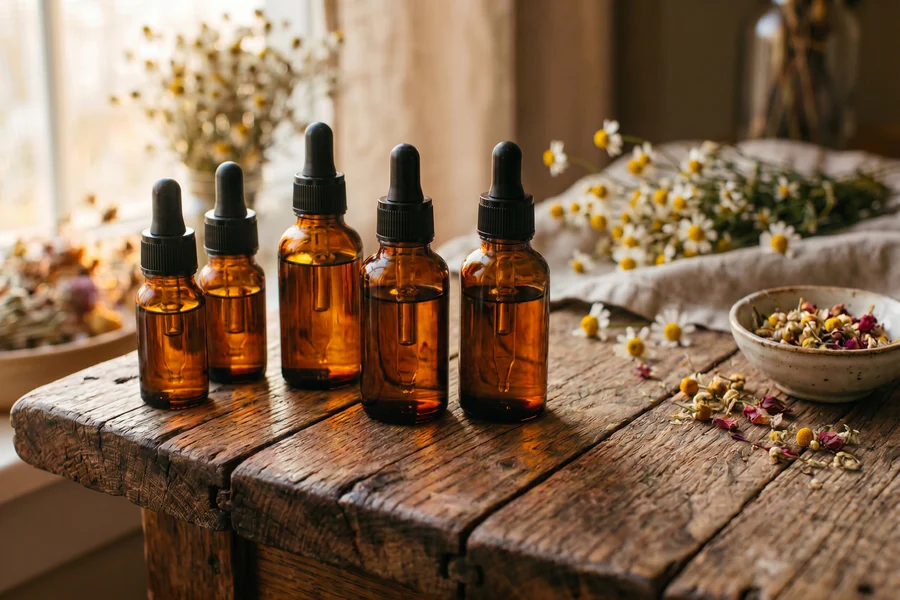
The phenolic compounds that make the entire process worthwhile are highly volatile. Any delay in bottling means losing a portion of active substances before the oil ever reaches the consumer.
One point is non-negotiable: the bottle should contain nothing but the oil itself. No alcohol, no preservatives, no stabilisers. Any additives strip the product of its claimed therapeutic properties — and it can no longer truly be called an essential oil.
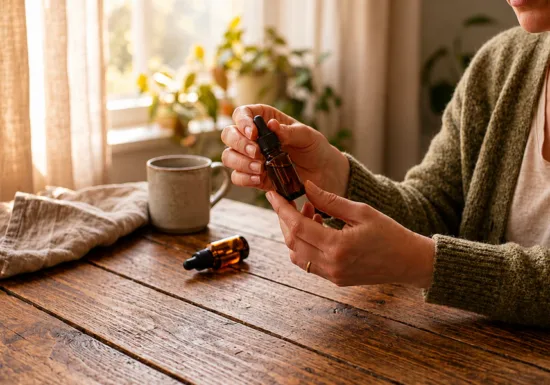
Packaging is also a quality marker in its own right: genuine essential oils are always bottled in dark glass — amber or cobalt blue — to protect active compounds from the damaging effects of light.
Which Brand Should You Choose?
There is no single right answer. Small producers work with raw materials grown in a limited area, which guarantees a consistent oil composition from batch to batch. Their range, however, tends to be limited, and production volumes are small.
Large companies — such as doTERRA, Young Living, and Plant Therapy — operate farms and facilities around the world, allowing them to oversee quality at every stage, from seed selection to final bottling. Leading brands conduct independent batch testing to GC/MS standards (gas chromatography / mass spectrometry), which verifies the chemical composition of each oil and rules out adulteration or dilution.
How to Choose a Genuine Essential Oil
Price alone is not a reliable guide. A real essential oil cannot cost next to nothing — but a high price tag is no guarantee of quality either. Here is what to look for:
- botanical Latin name of the plant on the label,
- country of origin of the raw material,
- extraction method,
- ingredients: essential oil only, nothing added,
- dark glass bottle,
- quality certifications or GC/MS test results available.
If a producer does not disclose information about the origin of their raw materials or their production method, that is a reason to question the quality of their product.
If you want to go deeper — read our article How to Choose an Essential Oil, where we walk through every quality criterion in detail.
An essential oil is a concentrate of living nature — the power of thousands of plants held in a single bottle. Understanding how it is made helps you make an informed choice, and get from aromatherapy exactly what it exists to offer: genuine support for your body, mind, and inner state.
Related Posts
The hidden power of essential oils: aromatherapy as a path to inner harmony
In a world where people increasingly seek answers within themselves, essential oils are becoming not…
Aromatherapy: An Ancient Practice of Self-Discovery and Healing Through Essential Oils
Aromatherapy is not simply a wellness trend — it is an ancient healing practice tested…
How to Choose Essential Oils: A Guide to Making an Informed Choice
The golden rule of aromatherapy is purity. Without it, the therapeutic effect disappears — and…