
The Cell’s Energy Source: How Your Body Works From the Inside Out
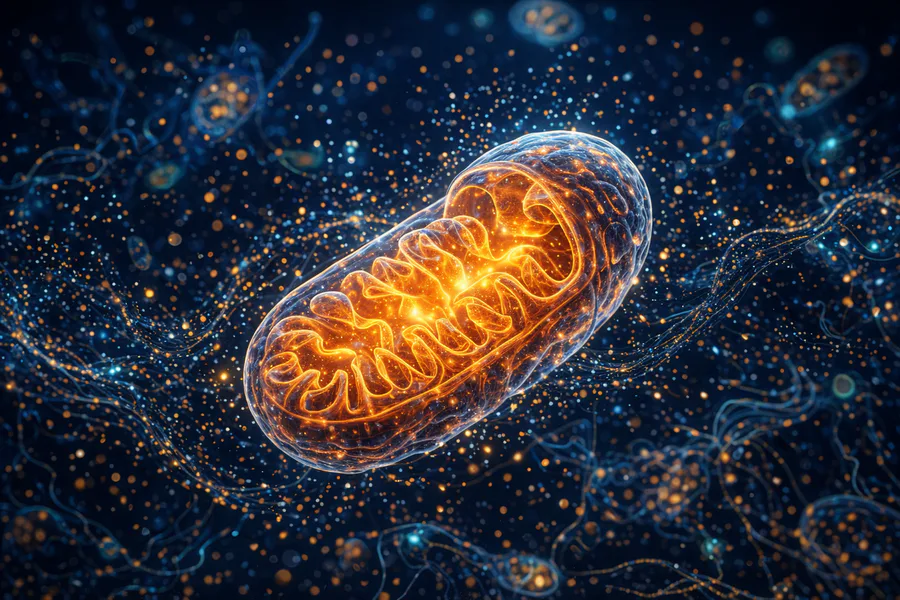
You wake up, grab a coffee, start your day. By noon — you’re completely drained. But the real cause runs much deeper. It’s happening inside every single cell in your body.
Everything alive needs energy. Plants pull it from sunlight. Some bacteria extract it from chemical reactions. For us, energy comes from food — but that’s just the beginning of the story. Between the plate in front of you and your ability to think, move, and feel alive, there’s an entire chain of remarkable transformations happening at a level you can’t see with the naked eye.
In this article, we’ll break down exactly how your body produces, stores, and uses energy — from the molecular level all the way up to the cell. You’ll find answers to why the body ages, why fatigue sets in, and most importantly, what you can actually do about it. No dry textbook biology here — just what genuinely matters to know about yourself.
Section 1. What Is Energy in the Body?
There’s One Molecule Without Which You Couldn’t Even Blink
When we talk about energy, the first thing that comes to mind is calories. We count them in food, fear having too many, chase deficits. But calories are just a unit of measurement. A calorie on its own can’t make your heart beat or a thought flash through your mind. For that, the body needs something else entirely.
Meet ATP — adenosine triphosphate. This molecule is the true energy currency of every cell in your body. Everything else is simply raw material the body uses to produce this universal energy source.
This is where nutrition stops being about appearance and becomes about cellular energy. If you’re curious about how to choose foods that actually fuel your cells — check out the article “Nutritionist’s Lifehacks for Losing Weight“, there’s a deep dive on exactly that.
ATP Is a Battery You Can Recharge
Let’s picture an ordinary battery. While it’s charged — everything works. Once it dies — the device stops. Now imagine that battery could be instantly recharged, right inside your body, no outlet needed. That’s exactly how ATP works.
The ATP molecule has three parts:
- Adenine — a nitrogen base (one of the four that encode information in DNA)
- Ribose — a simple sugar that forms the molecule’s “backbone”
- Three phosphate groups — the energy is stored in the bonds between them
When a cell needs energy, one phosphate group breaks off the ATP molecule. That releases energy — and the cell uses it to do its job. ATP becomes ADP (adenosine diphosphate — now with just two phosphates). Then the body “recharges the battery” — reattaches the phosphate, and ADP becomes ATP again.
This cycle runs nonstop — every second, in every cell of the body.
Numbers That’ll Surprise You
Every day, the body produces and uses an amount of ATP equal to its own weight — roughly 88–165 lbs of this molecule daily. And yet the body doesn’t stockpile ATP — it produces it in real time, continuously and without pause. Think of it like a phone that’s always plugged in: it doesn’t build up a reserve, it just draws power as it goes.
Each ATP molecule gets “recharged” an average of 500–750 times a day. Imagine a battery that gets charged and drained hundreds of times in a single day — and never wears out.
What ATP Is Used For — Literally Everything
ATP fuels every single process that happens in the body:
Movement. Every time you lift your arm, take a step, or even blink — your muscles are burning ATP. Specialized motor proteins like myosin literally “walk” using ATP energy, contracting muscle fibers as they go.
Thinking. Every thought is an electrical impulse running through nerve cells. Transmitting that impulse requires energy. No ATP — no impulse, no thought.
Recovery. Building new proteins, healing tissue, dividing cells — every step of the process runs on ATP.
Maintaining balance. Cells constantly pump substances in and out through specialized protein pumps. One of them — the sodium-potassium pump — runs around the clock, consuming enormous amounts of ATP to maintain the right electrical balance inside the cell.
Without ATP, the body is just a collection of inactive molecules. With it — it’s a living, thinking, moving system.
Section 2. Where Does This Energy Come From?
Meet the Mitochondria — Your Cell’s Power Plant
ATP is the universal energy source for every cell. But where exactly is it made? The answer leads us to one of the most remarkable structures in the living world — the mitochondria.
Mitochondria are tiny organelles that live inside almost every cell in the body. “Organelle” sounds complicated, but the idea is simple: it’s a small, specialized “organ” inside the cell with one specific job. The mitochondria’s job is to produce energy. That’s why it’s often called the cell’s power plant.
A single cell can hold up to 1,500 mitochondria at once. And where the workload is heaviest — in muscles, the liver, the heart — there are even more of them. The body is smart about resource allocation: the more energy an organ demands, the more power plants its cells contain.
How Do Mitochondria Make ATP?
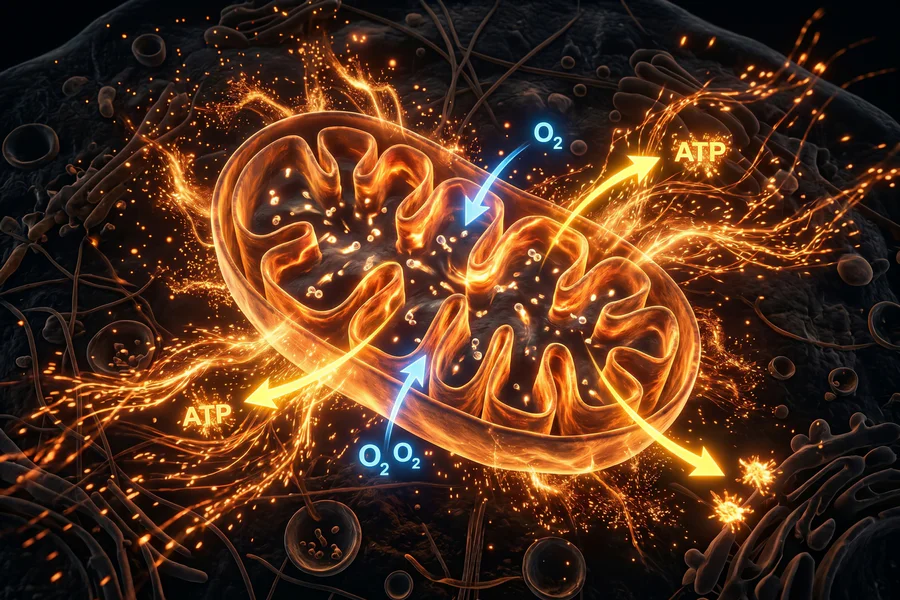
Picture a hydroelectric dam. Water builds up behind it, creating pressure. Then it flows through a turbine — the turbine spins, generating electricity. Something very similar happens inside a mitochondrion, except instead of electricity, it produces energy.
Mitochondria use about 80% of the oxygen that enters the body through breathing to kick off the energy production process. During this process, protons — tiny charged particles — build up on one side of the mitochondria’s inner membrane, creating something like an electrical charge. They then pass through a specialized protein called ATP synthase — which literally spins like a turbine, producing ATP molecules one after another.
From a single glucose molecule, a mitochondrion can produce around 30 ATP molecules. That’s remarkable efficiency — especially considering this process runs nonstop, 24/7, across trillions of cells simultaneously.
The Mitochondria — A Living Organism With Its Own History
Here’s a fact that tends to stop people in their tracks: mitochondria have their own DNA. Completely separate from the cell’s nuclear DNA. Scientists believe that billions of years ago, mitochondria were independent bacteria that eventually took up residence inside larger cells — and this partnership turned out to be so successful that it’s survived to this day.
But the most fascinating part is how mitochondrial DNA is passed down. Exclusively through the maternal line. When a sperm fertilizes an egg, it loses its mitochondria — they simply don’t make it into the embryo. Every mitochondrion in your body right now came from your mother. And hers came from her mother. And so on — through an unbroken chain of women — all the way back to the common ancestor of all humanity, who lived in Ethiopia around 200,000 years ago.
This unique property of mitochondrial DNA is what allowed scientists to reconstruct the family tree of every human ethnic group and trace our shared origins.
Mitochondria Can Multiply — and Die
Another remarkable thing about mitochondria: they play by their own rules. They can reproduce independently of cell division — if the body urgently needs more energy, mitochondria simply make more of themselves. And when they wear out, they self-destruct. This process is called autophagy — literally “self-eating.” It’s actually one of the body’s most important cleanup mechanisms: getting rid of damaged mitochondria so they don’t interfere with the cell’s function.
When mitochondria are healthy and active — the body is full of energy. When they become damaged and fewer in number — cells start starving for energy. And that’s exactly where the story of aging begins.
Section 3. How Does the Cell Store Energy?
Glycogen and Fat: The Body’s Internal Batteries
ATP is the universal energy source of the cell, and mitochondria are the factory where it’s produced. But that raises a logical question: where does the raw material for this production come from? Where does the body store the reserves it later converts into ATP?
The answer comes in two forms: glycogen and fat. And each one plays a distinct role.
Glycogen — Fast Energy on Demand
Glycogen is a long, branched chain made up of glucose molecules linked together. Picture a keychain: each key is a glucose molecule, and the ring holding them together is glycogen. When the body urgently needs energy, it simply snaps off one “key” from the end of the chain and sends it to the mitochondria for processing.
Glycogen is stored primarily in the liver and muscles. It’s a fast and readily available reserve — its breakdown begins almost instantly once the body sends the signal “energy needed.” Within just one to two minutes of active muscle work, glycogen becomes the primary fuel source.
That’s exactly why athletes pay such close attention to carbohydrates in their diet — they’re literally charging up their glycogen stores before competition.
Fat — Slow But Powerful
Fat is stored in specialized connective tissue cells called adipocytes. Essentially, each adipocyte is a cell with an enormous fat droplet inside. When the body needs energy from fat, it pulls fat from these cells, partially breaks it down, and transports it to where it’s needed, where it undergoes final conversion into ATP.
Which raises a fair question: if fat is such an efficient reservoir, why doesn’t the body store all its energy there? It comes down to speed. Breaking down fat is significantly slower than breaking down glycogen. During rest, fat handles the job just fine. This includes sleeping, a leisurely walk, or sitting at a desk. But the moment the body needs to accelerate, fat simply can’t keep up. Think sprinting, lifting something heavy, or responding to stress. That’s when glycogen steps in.
There’s another key difference. Glycogen holds onto water — it binds roughly 3 grams of water for every gram of its own weight. That makes it a heavy, bulky storage form. Fat, on the other hand, repels water — fat molecules are hydrophobic, meaning they literally avoid water and cluster away from it. That makes fat a compact, energy-dense storage form, ideal for long-term reserves.
Nature Knew What It Was Doing
Here’s a beautiful example from nature that shows just how brilliantly this system is designed. A grizzly bear doesn’t eat for months during hibernation. The only thing keeping it alive during that time is burning its fat reserves inside the mitochondria. And it’s not just energy — breaking down fat releases water, which compensates for the fluid lost through breathing. The bear’s body is a perfectly tuned survival machine.
Our bodies are built on the same principles. Glycogen and fat aren’t enemies or competitors. They’re two different tools within the same system, each one indispensable in its own moment.
What Happens When the Reserves Run Out?
When glycogen runs dry and fat can’t fill the gap fast enough — cells start experiencing energy starvation. That’s the feeling you know as sudden fatigue, brain fog, or complete loss of steam. It’s not a character flaw. It’s a signal from billions of cells: “we’re running out of fuel.”
Understanding this mechanism is the first step toward managing your energy intentionally — rather than just waiting for it to come back on its own.
Section 4. What’s Killing Your Mitochondria?
Aging Starts Here
We tend to think of aging as something that happens on the outside — wrinkles, gray hair, less energy every year. But it actually starts deep inside, at the cellular level. And one of the primary culprits is mitochondrial damage. Mitochondrial DNA is the most vulnerable link in this chain.
Free Radicals — The Invisible Destroyers
In the process of producing ATP, mitochondria use oxygen. It’s a powerful and efficient process — but it has a side effect: it generates what are known as free radicals. So what are those?
Picture a molecule that’s missing one electron. It becomes unstable and aggressive — literally “stealing” electrons from neighboring molecules, damaging them in the process. Those molecules then become unstable too. A chain reaction of destruction kicks off.
Mitochondrial DNA is ten times more vulnerable to free radical damage than the DNA in the cell’s nucleus. However, the nuclear DNA repair system is robust and effective. The mitochondrial DNA repair system, by contrast, is remarkably weak. Damage accumulates, mitochondria start functioning worse — and the cell gets less and less energy.
Over time, damaged mitochondria trigger autophagy — the self-destruction process we talked about earlier. But when the damage becomes overwhelming, the cell simply can’t keep up with repairs. The healthy mitochondria supply gets depleted — and the cell starts literally starving for energy.
The Sun — Friend and Enemy at Once

In 2000, researchers proved something important: ultraviolet radiation significantly accelerates mitochondrial DNA damage. This phenomenon is known as photoaging.
Researchers compared skin samples from areas regularly exposed to sunlight — the face, hands, décolletage — with samples from areas always covered by clothing. The results were unambiguous: sun-exposed areas showed significantly higher levels of mitochondrial DNA mutations. UV radiation triggers chronic oxidative stress — a state where free radicals are being produced faster than the cell can neutralize them.
And here’s what’s especially important to understand: a single damaged mitochondrion doesn’t go quietly. Within a few months, it can generate more than 30 copies of itself — all equally damaged. The defect literally multiplies from within — and as it does, the cell’s energy drops right along with it.
Stress, Cortisol, and Cellular Aging
But UV radiation isn’t the only enemy of mitochondria. There’s another factor we tend to underestimate — chronic stress.
When the body is under constant tension, it produces cortisol — the stress hormone. In small amounts, cortisol is helpful: it helps rapidly mobilize energy in dangerous situations. But when cortisol is chronically elevated — problems start.
High cortisol suppresses the production of somatotropin — growth hormone. And growth hormone is one of the key hormones responsible for keeping cells young. Young, active cells mean a young body. When growth hormone gets pushed out by cortisol, cells age faster, mitochondria recover more slowly, and energy levels drop.
Interestingly, even the daily grind of making countless decisions — and in modern life, we make hundreds — depletes the body’s internal resources and drives cortisol higher. That’s why by evening we so often feel completely wiped out, even when we’ve barely moved all day.
The Connection to Diseases We’re Afraid to Talk About
The accumulation of mitochondrial DNA damage isn’t just linked to skin aging and chronic fatigue. Scientists have established that mitochondrial mutations play a role in the development of serious neurodegenerative diseases — Alzheimer’s and Parkinson’s. That doesn’t mean mitochondria are the sole cause of these conditions. But it does mean that taking care of your mitochondria isn’t just a matter of energy and appearance. It’s a matter of long-term brain health and overall wellbeing.
The good news is that this process isn’t entirely irreversible. And that’s exactly what the next section is about.
Section 5. How to Protect and Restore Your Cell’s Energy?
From Ancient Wisdom to Modern Science — What Actually Works
The mechanism is clear: energy is produced, stored, and spent. Now the most important question: what do we do about it? How do we support our mitochondria, slow down their wear, and preserve cellular youth for as long as possible?
People have been searching for these answers throughout all of human history — ancient sages and modern scientists alike. And what’s fascinating is that they’ve arrived at remarkably similar conclusions.
What Modern Science Says
Science today points clearly to several factors that directly impact mitochondrial health.

Movement. Regular physical activity is one of the most powerful drivers of new mitochondria growth. When the body moves regularly, it receives the signal: “we need more energy” — and starts producing more mitochondria. This is known as mitochondrial biogenesis. And we’re not talking about grueling workouts — even regular walks deliver a meaningful effect.
Sleep. Sleep is when the bulk of the body’s cellular repair happens. During this time, the body actively produces somatotropin — the growth hormone we mentioned earlier. Chronic sleep deprivation isn’t just next-day fatigue. It’s a systematic hit to the mitochondria, night after night draining the cellular energy reserve.
Nutrition. Mitochondria run on what they’re fed. An excess of processed food, sugar, and trans fats generates oxidative stress — the very state where free radicals are breaking down mitochondrial DNA faster than it can repair itself. Whole foods rich in antioxidants, on the other hand, help neutralize free radicals and protect the mitochondria.
Stress management. Chronically high cortisol suppresses growth hormone and accelerates cellular aging. This is backed by hormonal metabolism research. Bringing stress levels down literally shifts the hormonal landscape and gives mitochondria the chance to recover.
What Our Ancestors Already Knew
What’s striking is that none of the above is a recent discovery. In fact, Vedic traditions described these principles thousands of years ago. The language was different — but the essence was the same.
Proper nutrition, a consistent daily routine, physical practices, breathwork, meditation, time in nature — these were the foundation of life in ashrams, where people deliberately worked with their body’s energy. Today we call it biohacking. The essence hasn’t changed.
Breathing practices deserve special attention. Mitochondria use 80% of the oxygen that enters the body through breathing. Conscious, deep breathing isn’t just relaxation. It’s literally feeding your cellular power plants.
What the Research Shows About Recovery
A study out of Harvard Medical School, UCSF, and Mount Sinai focused on recovery. It made a compelling case for a comprehensive approach. Researchers followed two groups of people who went on vacation. The first group took a standard vacation — hotel, beach, change of scenery. Second — participated in structured programs where rest was combined with regular yoga and meditation practices.
The results were striking. People in the first group returned to their previous state of low energy within about a month of getting home. People in the second group maintained a resourceful, energized state for up to ten months. The difference wasn’t in how much rest they got — it was in the quality and depth of it.
This confirms what both science and ancient traditions have been saying all along: the body doesn’t just need a break. It needs a system.
The Body Loves Rhythm
There’s one more principle that unites modern science and Vedic wisdom — cyclicality and routine. Our bodies are deeply connected to natural rhythms. Every biochemical process operates according to what are known as circadian rhythms — the body’s internal biological clock. This includes hormone production, cellular repair, and mitochondrial function.
When life is structured in alignment with these rhythms — sleeping and waking at consistent times, eating on a schedule, getting regular physical activity — cells literally function more efficiently. They “know” what’s coming and prepare for it in advance. Hormonal balance stabilizes, the nervous system recovers, mitochondria fire on all cylinders, and energy flows freely.
A disrupted routine isn’t just uncomfortable. It’s a signal of chaos to every cell in the body.
Practices That Work at the Cellular Level
Here’s what genuinely supports mitochondrial health and slows cellular aging:
Regular physical activity — even moderate, but consistent. Quality sleep — at least seven to eight hours during the dark hours of the night. A diet rich in antioxidants — berries, vegetables, leafy greens, healthy fats. Minimizing chronic stress — including information overload. Regular time in nature and protecting skin from excessive UV exposure. Conscious breathing and meditative practices — they lower cortisol and restore hormonal balance.
Conclusion
Your Energy Is in Your Hands
We’ve covered a lot of ground. From a tiny ATP molecule to the deepest causes of aging and fatigue. Ultimately, one thought captures all of it. How you feel, your energy levels, and even the rate at which your body ages — none of that is random. It’s the result of what’s happening inside every cell, every single second.
Mitochondria don’t just produce energy. They’re the point where everything converges — nutrition, sleep, stress, habits, and even thoughts. When they’re healthy — the body is full of strength, the mind is clear, life feels fully alive. When they’re damaged — the body starts sending signals: chronic fatigue, brain fog, accelerated aging.
The good news is that there are real tools to influence this process.
Here’s where you can start right now:</span></span>
Consistent sleep and wake times — this is the foundation without which everything else runs at half capacity. Regular movement throughout the day — the gym isn’t required, consistent walks are enough. Paying attention to nutrition — mitochondria run on exactly this fuel. A stress reduction practice — breathing, meditation, yoga, time in nature. And above all — consistently, not just when you feel like it.
The body doesn’t ask for heroics. It asks only for rhythm, attention, and respect for its deepest processes — and it responds with energy, clarity, and lasting health.
style=”font-weight: 400;”>For those who want to take the next step — clearing the body of what’s holding the mitochondria back from working at full capacity — a “Detox Guide” has been specially prepared. It’s a practical resource for gently and mindfully supporting your cells from the inside out.
style=”font-weight: 400;”>For those who want to go even deeper — the website has a growing collection of materials and tools for restoring energy and cellular health.