
Chronic Stress: Symptoms, Consequences, and How to Restore Your Body

Contents
- Introduction
- What Is Chronic Stress
- Why Chronic Stress Develops
- Symptoms of Chronic Stress
- What Chronic Stress Does to the Body and Brain
- How to Restore the Body
- Conclusion
Introduction
Fatigue that does not improve after sleep. Irritability with no obvious cause. A headache that arrives by midday. The sense that the body is running on empty — and simply cannot stop.
Many people blame a stressful period, the weather, or age. Yet when this state persists for weeks and months, it is no longer fatigue from a single situation. It is chronic stress. Moreover, its mechanism differs fundamentally from what most people call “just feeling stressed.”
What Is Chronic Stress
Stress is the body’s biological response to a challenge or threat. When the brain detects danger, the adrenal glands release cortisol and adrenaline. The heart beats faster, breathing quickens, and muscles tighten — the body prepares to act. This is a normal and necessary response that helps us manage difficult situations.
The problem begins when this response never switches off.
Acute Stress
Acute stress is a short burst. A traffic jam before an important meeting, a conflict with a colleague, an urgent deadline. The body mobilizes, the situation resolves, and cortisol returns to normal. Recovery follows — sometimes within minutes, sometimes within a few hours.
Chronic Stress
With chronic stress, cortisol never returns to a normal baseline. The body stays in a state of constant high alert — not because something dangerous is happening right now, but because the stressors are too numerous and do not disappear.
A toxic work environment. Financial instability. Strained relationships. A chronic illness — your own or a loved one’s. Persistent worry about the future. None of these are isolated blows. Together, they form a continuous background noise that exhausts the nervous system slowly and silently.
This is precisely why chronic stress is so dangerous. Symptoms build gradually, and people adapt to how they feel, accepting it as normal. “I’m just tired” is one of the most common phrases that conceals undiagnosed chronic stress.
Why Chronic Stress Develops
The sources of chronic stress vary from person to person. Nevertheless, they tend to fall into a few consistent categories.
Work and Professional Pressure
This is one of the most common sources. Chronic work-related stress does not stem from a single difficult project. Rather, it builds from a persistent sense of overload, lack of control, a toxic atmosphere, or a mismatch between effort and reward. Night shifts, working without days off, and constant availability all prevent the nervous system from leaving tension mode.
Financial Instability
Living paycheck to paycheck, carrying debt, and facing unexpected expenses create a background anxiety that does not fade, even in calm moments. Among the leading causes of chronic stress in adults, financial pressure consistently ranks near the top.
Relationships and Family
Ongoing conflict with a partner, difficult relationships with parents or children, and caring for an ill family member are all sources of emotional pressure. These situations have no simple solution and can continue for months or years.
Traumatic Experience
Past traumatic events — especially those experienced in childhood — can lay a biological foundation for chronic stress in adulthood. Research shows that adverse childhood experiences alter how the nervous system responds to stress. In some cases, these effects last a lifetime.
Environment and Life Circumstances
Living in a noisy city, exposure to pollution, overcrowding, social instability, and constant uncertainty all create a chronic stress baseline. Most people simply stop noticing it, because they have long since adapted.
An Important Nuance
Stress is not an objective feature of a situation. The same circumstances may feel unbearable to one person and entirely manageable to another. What matters is how the brain interprets what is happening — as a threat or as a challenge that can be handled. For this reason, working with chronic stress always involves working with individual perception, not just external circumstances.
Symptoms of Chronic Stress
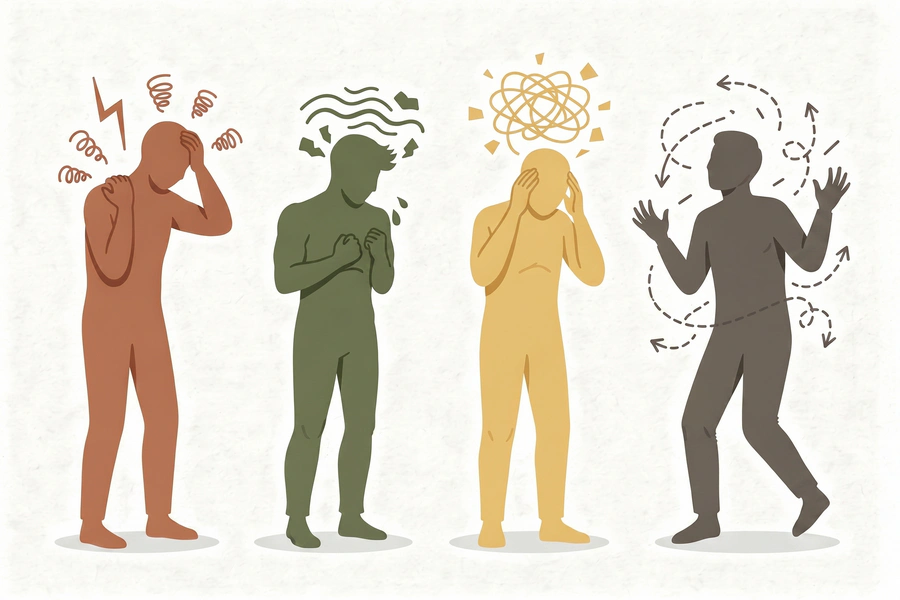
What makes chronic stress so difficult to catch is that its symptoms appear gradually. A headache gets blamed on screen time. Fatigue is attributed to poor sleep. Irritability seems like just a bad day. However, if three or more symptoms from the list below are present for several consecutive weeks, that is a signal worth taking seriously.
Chronic stress affects four levels: physical, emotional, cognitive, and behavioral.
Physical Symptoms
The body expresses chronic stress through concrete physical signs. Persistent fatigue that does not lift after sleep is one of the most characteristic indicators. Added to this are headaches, muscle tension — especially in the neck, shoulders, and back — and sleep problems such as difficulty falling asleep or, conversely, constant drowsiness. Rapid heartbeat, digestive issues, nausea, changes in appetite, reduced libido, and frequent colds or infections are all physical markers of a body that has been in survival mode for too long.
In women, chronic stress can disrupt the menstrual cycle. This is often one of the earliest signs of hormonal imbalance caused by prolonged elevated cortisol.
Emotional Symptoms
On an emotional level, chronic stress shows up as persistent irritability, anxiety, and a sense of being overwhelmed or helpless. A person may feel they have lost control of their life. Emotional withdrawal often follows — a desire to avoid people, situations, and even one’s own feelings. Interest in activities that once brought joy begins to fade.
Cognitive Symptoms
Chronic stress literally changes how the brain works. Concentration becomes harder, decision-making feels laborious, and retaining information grows more difficult. Thoughts become muddled, and a sense of brain fog sets in. The ability to plan and think in sequence declines — because the brain is preoccupied with monitoring threats rather than solving problems.
Behavioral Symptoms
At the behavioral level, habits begin to shift. A person may start overeating or lose their appetite entirely. Tasks get postponed. Social contact is avoided. Consumption of alcohol, caffeine, or other substances increases as a way of coping with tension. Physical activity gradually decreases.
| Level | Symptoms |
| Physical | Fatigue, headaches, muscle tension, sleep disturbances, rapid heartbeat, digestive issues, frequent illness |
| Emotional | Irritability, anxiety, helplessness, emotional withdrawal, loss of interest in life |
| Cognitive | Brain fog, difficulty concentrating and remembering, inability to make decisions |
| Behavioral | Changes in appetite, social isolation, procrastination, increased alcohol and caffeine use |
What Chronic Stress Does to the Body and Brain
Chronic stress is not simply an unpleasant state. It is a physiological process that gradually alters the structure and function of organs throughout the body.
Cortisol: The Hormone That Will Not Switch Off
Under normal conditions, cortisol follows a clear daily rhythm — peaking in the morning to provide energy and dropping at night to allow recovery. In chronic stress, this rhythm breaks down. Cortisol either stays consistently elevated or fluctuates erratically throughout the day. As a result, a cascade of disruptions unfolds across nearly every body system.
The Brain and Nervous System
Prolonged cortisol exposure reshapes the brain. The prefrontal cortex — responsible for decision-making, planning, and emotional regulation — weakens. This is why it becomes so difficult, under chronic stress, to think clearly or avoid overreacting to minor things.
At the same time, activity in the amygdala — the brain’s fear and anxiety center — intensifies. The brain reorganizes itself around constant threat perception: less analysis, more reactivity.
Neurotransmitter production suffers as well. Serotonin drops, bringing low mood and a loss of pleasure. Dopamine declines, taking motivation and the capacity for joy with it. Together, these changes create a direct pathway toward depression and anxiety disorders.
Modern life adds another layer to this. Chronic light deprivation deepens the deficit of serotonin and dopamine, leaving the nervous system even more vulnerable. For more on this, see the article “Seasonal Depression: What a Lack of Light Does to the Brain and How Biohacking Can Help.”
The Immune System
Cortisol has anti-inflammatory properties — in the short term, this is beneficial. Under chronic stress, however, the immune system gradually stops responding appropriately to cortisol’s signals. The result is reduced immunity, more frequent infections, slower healing, and a higher risk of autoimmune conditions.
The Cardiovascular System
Persistently elevated cortisol keeps blood pressure high, increases the workload on the heart, and promotes inflammation of blood vessel walls. Chronic stress is a well-established risk factor for hypertension, heart attack, and stroke.
Metabolism and Body Weight
High cortisol stimulates the accumulation of visceral fat — fat stored around the internal organs. At the same time, insulin sensitivity decreases, and cravings for sugar and high-calorie foods increase. This is why weight can rise under chronic stress even without any changes in diet.
The Digestive System
The gut and brain are directly connected through the vagus nerve. Under chronic stress, this connection works against us. Gut motility is disrupted, the microbiome shifts, and symptoms such as bloating, nausea, and irritable bowel syndrome appear. Chronic stress is one of the leading contributors to functional digestive disorders.
Hormonal Balance in Women
In women, chronic stress disrupts the entire hormonal axis. Elevated cortisol suppresses the production of estrogen and progesterone, interfering with ovulation and the menstrual cycle. This can manifest as irregular cycles, painful periods, worsening PMS, or — in cases of extreme stress — the complete absence of menstruation.
Cellular Aging
Chronic stress accelerates biological aging at the cellular level. Research shows that people with high levels of chronic stress have shorter telomeres — the protective caps on chromosomes — compared to people of the same age without chronic stress. Shorter telomeres mean faster cell aging and a higher risk of age-related disease.
How to Restore the Body

Chronic stress does not resolve on its own while its source remains. However, even when that source cannot be removed — workplace pressure, financial circumstances, caregiving responsibilities — the body can still be supported. With the right approach, the nervous system can gradually return to a recovery-oriented state.
Breathing: The Fastest Tool
Breathing is the only function of the autonomic nervous system that can be consciously controlled. Through intentional breath, it is possible to directly influence cortisol levels and shift the nervous system from its sympathetic state (stress) into the parasympathetic state (recovery).
Extending the exhale is the key principle. When the out-breath is longer than the in-breath, the vagus nerve activates and heart rate slows. As little as five to ten minutes of this type of breathing can significantly calm the nervous system.
Among the most effective practices is pranayama — a system of breathing techniques from Ayurveda. It slows the heart rate, lowers cortisol, and activates the parasympathetic branch of the nervous system — the one responsible for rest and recovery.
Sleep: The Foundation of Recovery
Without adequate sleep, recovery from chronic stress is not possible. During sleep, the brain clears toxins, hormonal balance is restored, and cortisol levels decline. Under chronic stress, sleep is often disrupted — creating a vicious cycle in which stress impairs sleep, and poor sleep intensifies stress.
Practical steps include going to bed at the same time each night, removing bright light and screens two hours before sleep, and ensuring complete darkness in the bedroom. A room temperature of 18 to 20 degrees Celsius supports the circadian mechanisms that chronic stress tends to disrupt.
Movement: Burns Cortisol
Physical activity is one of the few ways to literally use up cortisol. This stress hormone was designed for physical action — running, fighting, moving. Without movement, it simply accumulates.
For recovery under chronic stress, moderate activity works best: walking, swimming, and yoga. Intense training at high stress levels can place additional strain on the adrenal glands, which is worth keeping in mind. Starting with 20 to 30 minutes of calm walking each day is a reasonable place to begin.
Yoga is particularly effective for chronic stress, combining movement, breathing, and mindfulness in a single practice. Join our online yoga classes — one of the most effective ways to address stress systematically through the body.
Nutrition: Supporting the Nervous System
Chronic stress depletes stores of magnesium, B vitamins, and omega-3 fatty acids — precisely the nutrients the nervous system needs to function well. At the same time, stress increases cravings for sugar and high-calorie foods, creating a damaging cycle.
Key principles of eating under chronic stress include regular meals without long gaps (stable blood sugar reduces anxiety), foods rich in magnesium such as dark chocolate, nuts, seeds, and leafy greens, adequate protein, and limiting caffeine and alcohol. Caffeine stimulates cortisol release — which is the last thing the body needs when stress is already chronic.
Meditation and Mindfulness
Regular meditation practice literally changes the structure of the brain. It strengthens the prefrontal cortex and reduces activity in the amygdala — precisely the opposite of what chronic stress produces.
Even ten minutes a day is enough to notice a difference over time. Starting with simple breath observation requires no app and no special equipment.
For more on how meditation, sound practices, and other neurosensory tools work for anxiety and stress, see the article “Neurosensory Therapy: Brain Biohacking Without Pills for Anxiety, Depression, and ADHD.”
Social Support
Talking with someone close lowers cortisol levels. Social isolation — which frequently accompanies chronic stress — makes things worse. Recovery requires connection with other people, even when the energy for socializing feels nearly nonexistent.
When Professional Help Is Needed
If stress does not improve despite consistent effort, and it is interfering with work, relationships, and basic functioning, that is a clear signal to seek professional support. Cognitive behavioral therapy has the strongest evidence base among psychological approaches to treating chronic stress. A doctor can also assess whether medication support may be appropriate.
Conclusion
We live in an era when being constantly tired has become normal. The body adjusts, adapts, and endures. Up to a point. The body is remarkably patient — yet it functions better when it is listened to. A little attention to oneself, and the body responds with energy and calm.
We invite you to the Vedic Knowledge Club — a place to learn how to listen to your body and restore its resources through Ayurveda and mindful practice.
This article is for general informational purposes only and does not replace consultation with a specialist. If symptoms of stress are affecting your quality of life or are accompanied by chronic health conditions, please consult a doctor.