
Ayurvedic Skin Treatment: Acne, Eczema, Psoriasis and Dosha-Based Care
Contents
- Introduction
- Ayurvedic Skin Diseases
- Ama and the Skin: Toxins from Within
- Nutrition for Healthy Skin by Dosha
- Ayurvedic Skincare
- Herbs for the Skin: The Ayurvedic Beauty Apothecary
- Panchakarma for the Skin
- Conclusion
- Frequently Asked Questions
Introduction
Identifying your skin type by dosha is the first step. The second is understanding what is happening inside — and how to work with it.
The first article covered diagnosis and skin types. This one is about mechanisms and tools. Why acne, eczema, and rosacea appear from an Ayurvedic perspective. How Ama and a weakened Agni damage the skin from within. Which nutrition, herbs, and procedures restore balance — not temporarily, but at the level of tissues.
Ayurveda does not separate skin problems into “cosmetic” and “medical.” Any disruption in skin condition is a signal of systemic imbalance. Lasting improvement never begins with a new serum — it begins with understanding the cause. If you are not yet familiar with your Ayurvedic skin type, the article «Skin by Dosha: Why Acne, Dryness and Inflammation Appear» is the right place to start — it covers diagnosis, skin types, and dosha-based care in full.
Ayurvedic Skin Diseases: When Imbalance Becomes a Diagnosis
Ayurveda classifies skin diseases under the term Kushtha — from the Sanskrit meaning “that which destroys beauty.” They fall into two groups. Maha Kushtha covers serious, deep conditions. Kshudra Kushtha covers lighter, more superficial states.
Any skin disease, in Ayurvedic understanding, is always a consequence of internal imbalance. Bacteria, allergens, and genetics are not causes in themselves. They become causes only when the ground has already been prepared — by doshic imbalance and Ama accumulation. For this reason, Ayurveda never treats the symptom. It eliminates the conditions that created it.
| Ayurveda | Modern Term | Doshic Imbalance | Ayurvedic Approach |
| Yauvana Pidika | Acne | Pitta + Ama | Virechana, cooling diet, Neem and Manjistha internally |
| Vicharchika | Eczema / Dermatitis | Pitta + Kapha | Virechana, Snehana, coconut oil with camphor topically |
| Kitibha / Ekakushtha | Psoriasis | Vata + Kapha | Panchakarma, Kumkumadi and Neem topically |
| Rakta Pitta | Rosacea | Pitta (blood) | Virechana, Snehana, coriander and mint tea internally |
| Uttana Pitta | Urticaria | Pitta | Aloe topically, Virechana, cooling diet |
Yauvana Pidika — Acne
Yauvana Pidika translates as “flower of youth.” This is how Ayurveda described what we now call acne. The primary cause is excess Pitta in the blood combined with Ama accumulation in the skin. Excess heat thickens sebum, inflames follicles, and creates ideal conditions for bacterial growth.
However, acne in Ayurveda is not always a Pitta condition. The picture varies depending on the type of breakouts.
Pitta acne presents as red, inflamed, painful pustules. Hot to the touch. Worsened by spicy food, alcohol, stress, and heat.
Kapha acne is deep, cystic, and cold to the touch. It develops slowly and clears slowly. Worsened by heavy food, daytime sleep, and a sedentary lifestyle.
Vata acne appears as small, dry breakouts without significant inflammation. Often accompanied by flaking around the lesion. Worsened by stress, irregular eating, and dehydration.
Ayurvedic approach: Virechana — purgation using herbal laxatives — to clear excess Pitta. A cooling diet. Neem and Manjistha internally to purify the blood. Turmeric topically.
Important: any internal Ayurvedic procedures, including Virechana and herbal intake, must be conducted only under the supervision of a qualified Ayurvedic physician. Self-prescription is not appropriate.
Vicharchika — Eczema and Dermatitis
Vicharchika is the Ayurvedic name for the group of conditions modern medicine describes as eczema and dermatitis. At the root lies a Pitta-Kapha imbalance. Pitta creates inflammation, while Kapha brings dampness and stagnation. Together, they produce the characteristic picture of weeping, itching, inflamed skin.
Ama plays a central role in Vicharchika. Impaired digestion leads to toxin accumulation in the blood, which then finds its way out through the skin. For this reason, Ayurveda addresses the gut and liver first — not the skin itself.
Ayurvedic approach: Virechana to clear Pitta. Snehana — oleation with medicated oils — to nourish and restore the skin barrier. Coconut oil with camphor topically to relieve itching and inflammation. A diet free of spicy, salty, and sour foods.
Kushtha (Kitibha / Ekakushtha) — Psoriasis
In Ayurveda, psoriasis is described as Kitibha or Ekakushtha — a chronic condition rooted in Vata-Kapha imbalance. Vata produces dryness and scaling, while Kapha creates thickening and stagnation. Together, they form the characteristic plaques — dry, scaly, and often itchy.
Digestive disruption and chronic stress are the main triggers for flare-ups. Ayurveda views psoriasis as a deep systemic condition that requires sustained, comprehensive work.
Ayurvedic approach: Panchakarma — particularly Virechana and Rakta Mokshana. Medicated oils topically — Kumkumadi, Neem, Aloe. A diet free of heavy, oily, and spicy foods. Regular yoga and meditation to reduce stress.
Rakta Pitta — Rosacea
Rakta Pitta — literally “hot blood” — is the Ayurvedic name for what modern dermatology calls rosacea. Excess heat in the blood leads to capillary dilation, persistent redness, and the appearance of visible vessels on the face.
Key triggers include spicy food, alcohol, overheating, direct sun exposure, hot drinks, and chronic stress. All of them intensify Pitta and heat the blood.
Ayurvedic approach: a strict cooling diet. Virechana to reduce Pitta. Snehana with coconut oil topically. Coriander and mint tea internally. Complete elimination of alcohol and spicy food.
Uttana Pitta — Urticaria
Uttana Pitta is the Ayurvedic name for urticaria. Red, itchy, raised welts are Pitta surfacing through the skin in response to a trigger. Impaired digestion, allergen contact, and emotional stress are the three primary mechanisms.
Ayurvedic approach: aloe vera topically for immediate cooling. Virechana to clear excess Pitta. A cooling diet. Coriander water internally.
The General Principle of Treating Skin Diseases in Ayurveda
Every skin condition in Ayurveda follows the same algorithm: identify the doshic imbalance → locate the source of Ama → clear the channels → restore Agni → support the tissues.

Two people with the same diagnosis of acne or eczema may therefore receive completely different recommendations for nutrition, herbs, and procedures. It depends on which dosha dominates and which tissue level is involved. For chronic skin conditions, Ayurveda strongly recommends individual consultation with a qualified specialist — rather than following general advice from the internet.
Ama and the Skin: Toxins from Within
If one Ayurvedic principle explains most modern skin problems, it is Ama.
Ama consists of unfinished metabolic byproducts — toxins that form inside the body when food is not properly digested, when emotions are not fully processed, or when the load exceeds the system’s capacity. Ama does not come from outside. The body produces it itself. This is why it responds so poorly to topical treatment.
How Ama Reaches the Skin
The path of Ama into the skin begins in the gut. A weakened Agni cannot complete digestion. Partially oxidised metabolic products form, enter the bloodstream, and settle in the tissues — including the skin.
The Shrotas — the channels of circulation in Ayurveda — become clogged with Ama. Cellular nourishment is disrupted. Cell renewal slows down. Lymphatic flow deteriorates. The skin stops receiving what it needs and begins signalling through symptoms. At the cellular level, this process is directly connected to mitochondrial function — it is the mitochondria that produce the energy required for tissue renewal. For more on how mitochondria influence health and cellular regeneration — «The Cell’s Energy Source: How Your Body Works From the Inside Out».
The skin is one of the body’s primary elimination organs in Ayurveda. When the main channels — the gut, liver, and kidneys — become overloaded, the body begins releasing Ama through the skin. This is why breakouts often intensify during periods of stress, after heavy meals, or when digestion is sluggish.
Signs of Ama in the Skin
A dull, grey, or sallow complexion is the first and most obvious sign. The skin looks heavy and lacks natural radiance — even when a person is sleeping enough and drinking plenty of water.
A white or grey coating on the tongue in the morning is a classic Ama marker. The tongue directly reflects the state of the gut and the quality of digestion. When the coating is present regularly, Ama is accumulating systemically — and the skin will inevitably respond.
Breakouts without an obvious external cause — acne that appears not from pollution or incorrect skincare, but from within. It is particularly telling when breakouts coincide with periods of stress or heavy eating.
Persistent inflammation that does not respond to topical treatment is another signal. When a cream or ointment brings temporary relief but the problem returns, the source lies deeper than the skin’s surface.
Detox as the First Step Toward Healthy Skin
Ayurveda holds a clear principle: before nourishing the skin from outside, it must be cleansed from within. No oil, mask, or cream will deliver its full potential while the channels of circulation are blocked by Ama.
Restoring Agni begins with simple steps: a glass of warm water on an empty stomach, ginger tea before meals, eliminating snacking, and making lunch the main meal of the day. These practices gradually rebuild the digestive fire and stop the ongoing production of Ama.
Triphala, ginger tea, and warm water on an empty stomach form the daily foundation. However, once a season, the skin needs a deeper reset. The Easy Detox, 3-Day Detox, and 7-Day Detox programmes were created for exactly that moment — when the body is ready for renewal and not resisting it.
The Gut-Skin Connection: What Modern Science Shows
Modern dermatology is increasingly investigating the link between gut microbiome health and skin condition. This connection is known as the gut-skin axis and is currently one of the most actively researched areas in dermatology.
Research shows that gut dysbiosis — disruption of the microbiome — is directly associated with conditions such as acne, rosacea, psoriasis, and atopic dermatitis. Gut inflammation increases intestinal permeability. Toxins enter the bloodstream and trigger systemic inflammation, which manifests on the skin. Ayurveda described this mechanism through the concept of Ama and blocked Shrotas — thousands of years before microbiology existed as a science.
Nutrition for Healthy Skin by Dosha
Ayurveda holds that beautiful skin begins not in the bathroom, but in the kitchen. Everything that enters the mouth eventually shows on the face. Not because “you are what you eat” — but because nutrients reach the deep layers of the skin through digestion. In the same way, toxins from poor digestion seek an exit through it.
The Six Tastes and the Skin
Ayurveda identifies six tastes — sweet, sour, salty, pungent, bitter, and astringent. Each influences the doshas differently and, as a result, affects the skin in distinct ways.
Bitter taste is the primary ally of healthy skin for all types. It stimulates liver function, improves bile flow, and helps clear toxins from the blood. Rocket, dandelion leaves, turmeric, bitter melon, and neem are all bitter taste in action. A few leaves of bitter greens at the end of each meal gradually purify the blood and improve complexion over time.
Astringent taste is the second ally. It dries excess moisture, reduces inflammation, and tones the tissues. Pomegranate, apple, blueberry, and lentils are sources of astringent taste, particularly beneficial for Pitta and Kapha skin.
Pungent taste, in moderate amounts, stimulates Agni and improves skin circulation. It is beneficial for Kapha types. For Pitta skin, however, it should be kept to a minimum — or eliminated entirely during flare-ups.
Nutrition by Dosha for Healthy Skin
| Dosha | What to Eat | What to Avoid |
| Vata | Warm cooked meals, ghee, root vegetables, avocado, nuts, bananas, sesame, warm milk | Raw salads, cold drinks, carbonated water, excess caffeine, dry crunchy foods |
| Pitta | Cucumber, zucchini, coconut milk, leafy greens, pears, melon, barley, coriander, fennel, mint | Spicy, sour, fried food, alcohol, tomatoes, citrus, vinegar, red meat |
| Kapha | Bitter greens, legumes, ginger, turmeric, black pepper, light vegetables, berries, aged honey | Excess dairy, sugar, fatty food, cold food, heavy desserts, daytime sleep after eating |
Foods That Benefit All Skin Types
Despite the differences between doshas, some foods are universally recommended by Ayurveda for skin health.
Turmeric is the number one anti-inflammatory agent in Ayurveda. Added to food or taken with warm milk, it works on the skin from within. It reduces systemic inflammation, supports the liver, and purifies the blood. Golden milk — warm milk with turmeric, black pepper, and ghee — is a classic Ayurvedic recipe for healthy skin. It works for all three doshas.
Triphala, taken at night in warm water, gently cleanses the gut and improves nutrient absorption. Regular use over several weeks noticeably brightens the complexion and reduces inflammatory breakouts.
Amalaki — Indian gooseberry, the foundation of Triphala — is one of the richest natural sources of vitamin C. Vitamin C is essential for collagen synthesis, the primary protein responsible for skin firmness and youthfulness. Unlike synthetic supplements, Amalaki is far better absorbed thanks to its natural complex of accompanying compounds.
Ghee — clarified butter — nourishes the deep skin tissues from within. A small amount of ghee in the daily diet supports the skin barrier, improves absorption of fat-soluble vitamins, and reduces dryness. This is particularly relevant for Vata types.
Water and the Skin
Ayurveda pays particular attention to water quality and temperature. Cold water — especially during meals — weakens Agni and slows metabolism. Warm water, in contrast, supports the digestive fire, stimulates lymphatic flow, and helps clear toxins.
Copper water — water stored in a copper vessel — is especially beneficial for the skin. Copper has antimicrobial properties, stimulates collagen production, and supports gut microbiome balance. All of these directly influence skin condition.
Herbal teas — coriander, mint, fennel — are particularly helpful for Pitta skin. Ginger tea suits Vata and Kapha types. They simultaneously support Agni and supply the body with phytonutrients that improve skin from within.
Incompatible Foods and the Skin
Ayurveda places great importance on food combining — viruddha ahara. Some combinations, even of individually beneficial foods, disrupt digestion when eaten together and contribute to Ama formation.
Milk with sour fruits is a classic example of an incompatible combination. Fish with milk, honey with hot food, yoghurt in the evening — all of these combinations create Ama and indirectly worsen skin condition. For this reason, Ayurveda pays attention not only to what to eat, but also to what to combine it with and when.
Pauses between meals are just as important as the meals themselves. They give Agni time to complete its digestive cycle. It is in these pauses that tissue-cleansing processes are activated. For more on how food pauses work at the cellular level and how to align this approach with Ayurvedic principles — «Time to Eat and Time to Fast: Everything About Intermittent Fasting».
Ayurvedic Skincare
Outside — a Continuation of What Happens Within
Ayurvedic skincare is a system in which every action has meaning and works in connection with nutrition, lifestyle, and doshic balance. External care is always secondary to internal balance in Ayurveda. That said, it is not unimportant. The right oils, ubtans, and masks amplify the work already being done from within.
Abhyanga for the Face — Oil Self-Massage
Abhyanga — daily self-massage with warm oil — is one of the primary tools of Ayurvedic care. Applied to the face, it means using soft circular movements with gentle pressure along massage lines.
Warm oil penetrates the deep layers of the skin. It nourishes the tissues, stimulates lymphatic drainage, and improves microcirculation. Regular facial Abhyanga reduces the appearance of wrinkles. It also brightens the complexion and restores natural radiance — regardless of skin type.
The technique is simple. A few drops of warm oil are warmed in the palms. Then, with light circular movements toward the lymph nodes — from the centre of the face toward the temples, from the chin toward the ears, from the nose toward the cheeks. The neck is massaged upward. Time — 3 to 5 minutes. Afterwards, leave the oil on for 10 to 15 minutes and rinse with warm water or gently pat dry.
Oils by skin type: Vata — warm sesame or almond oil. Pitta — coconut oil at room temperature or sandalwood-based oil. Kapha — light jojoba or mustard oil.
Ubtan — Ayurvedic Cleansing
Ubtan is a traditional Ayurvedic skincare cleanser made from chickpea flour. It was used in India long before foaming cleansers and micellar waters existed. Ubtan gently exfoliates, nourishes, and balances the skin — without disrupting the skin barrier.
The basic recipe is straightforward. Chickpea flour is mixed with liquid to a soft paste consistency and applied to damp skin in circular movements, then rinsed with warm water. The liquid base and additional ingredients are chosen according to skin type.
Kumkumadi — The Golden Oil of Ayurveda
Kumkumadi is one of the most celebrated Ayurvedic formulas for facial skin. At its core is saffron — kumkuma — infused in sesame oil with dozens of medicinal herbs. The classical Kumkumadi recipe appears in ancient Ayurvedic texts and has changed very little over thousands of years.
Kumkumadi works for all three skin types. It is particularly effective, however, for Vata and Pitta. And it fades pigmentation, evens skin tone, restores radiance, and slows visible signs of ageing. It is applied in the evening — a few drops on cleansed skin with gentle patting movements.
Manjistha — The Herb for Complexion
Rubia cordifolia belongs to the Ayurvedic category of varnya — substances that improve the complexion. Manjistha purifies the blood and lymph, draws toxins from deep tissues, and resolves stagnation. It is used both internally — as powder or capsules — and topically, in masks and oils.
Rose Water — The Universal Toner
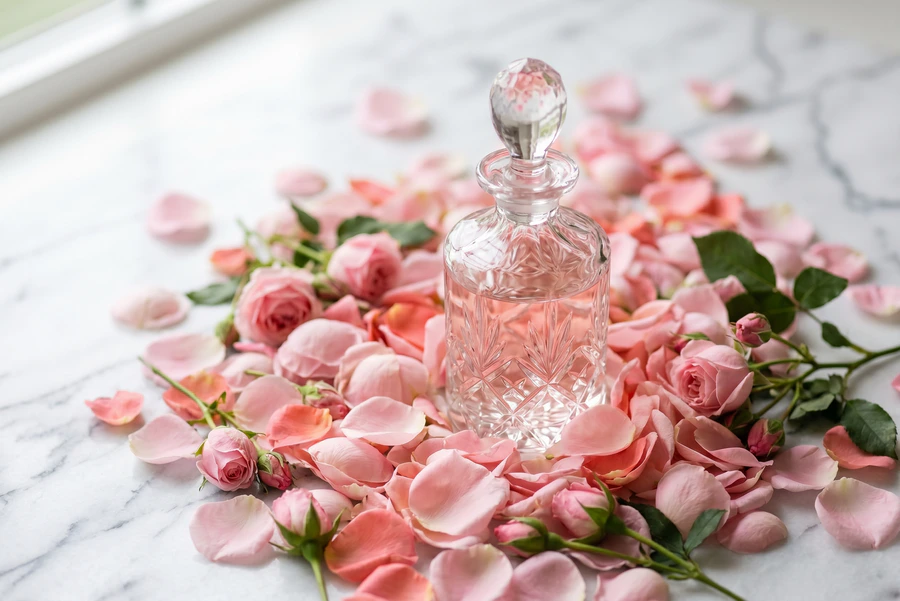
Rose water — a distillate of rose petals — suits all three skin types. It is particularly valuable for Pitta: it cools, soothes redness, tightens pores, and restores skin pH after cleansing. It is used as a toner after washing, as a base for masks, and as a refreshing mist throughout the day.
Seasonal Skincare: Adjusting the Routine Through the Year
Winter intensifies Vata — all skin types need more nourishment and protection. Even Kapha skin needs a richer oil in cold weather.
Summer intensifies Pitta — cooling products, sun protection, and light textures are relevant for all types. In particular, Pitta skin benefits from reducing spicy foods during the warmer months.
Spring intensifies Kapha — this is the best time for detox and deeper cleansing. Scrubs, clay masks, and lymphatic drainage massage are most effective in spring.
Stress and the Skin
Ayurveda understood long ago what modern psychodermatology is only beginning to confirm: emotional state directly affects the skin. Chronic stress raises cortisol, which increases sebum production, triggers inflammation, and breaks down collagen. Meditation, pranayama, and yoga lower cortisol at the biochemical level. They also support neurotransmitter balance and improve skin microcirculation. Regular practice gives the skin something no serum can — resilience to stress triggers from within.
Herbs for the Skin: The Ayurvedic Beauty Apothecary
Ayurvedic herbs for the skin fall into several categories. Varnya herbs improve complexion. Tvachya herbs nourish and restore the skin. Kandughna herbs relieve itching and inflammation. Rakta shodhana herbs purify the blood. Understanding these categories helps in choosing herbs not by the principle of “they say it works,” but by “this is what my skin needs right now.”
Important note: Ayurvedic herbs are serious phytotherapeutic substances. Internal use requires consultation with an Ayurvedic physician before starting.
Neem — Antibacterial Protection
Neem — Azadirachta indica — has powerful antibacterial, antifungal, and anti-inflammatory properties. It purifies the blood and inhibits the growth of pathogenic bacteria in the pores. It is particularly effective for Pitta and Kapha types with acne, eczema, and dermatitis. For Vata types, it should be used with caution — only in combination with warming herbs.
Turmeric — The Gold of Ayurveda
Turmeric — Curcuma longa — is an anti-inflammatory, antibacterial, and antioxidant substance. Taken internally, it reduces systemic inflammation and supports the liver. Applied topically, it fades pigmentation and accelerates healing.
Note: turmeric stains the skin with prolonged contact. Masks should be rinsed off after 10 to 15 minutes.
Manjistha — The Blood Purifier
Manjistha — Rubia cordifolia — is the primary Ayurvedic herb for improving complexion. It draws toxins from the blood and lymph, resolves stagnation, and improves microcirculation in the skin. It is particularly effective for Pitta and Kapha types. Results become noticeable after four to six weeks of regular use.
Aloe Vera — Cooling and Healing
Aloe gel contains over 200 biologically active compounds that cool, hydrate, and accelerate skin regeneration. It is indispensable for Pitta skin with inflammation, sunburn, and rosacea. It also suits Vata skin — applied with a nourishing oil on top. For Kapha, it should be used in moderate amounts.
Ashwagandha — Protection Against Stress-Ageing
Ashwagandha reduces cortisol — the primary enemy of youthful skin, which breaks down collagen and accelerates ageing. It restores adrenal function and protects cells from oxidative stress. It is particularly relevant for Vata skin, where stress and anxiety directly worsen skin condition.
Shatavari — Hydration from Within
Shatavari — Asparagus racemosus — belongs to the rasayana category: herbs that rejuvenate tissues at a deep level. It nourishes the plasma and blood — the first tissue levels of the dhatu system on which skin condition depends. It is particularly effective for Vata and Pitta types experiencing chronic dryness and loss of firmness.
Brahmi — Neuroprotector for the Skin
Brahmi reduces mental fatigue and anxiety — one of the primary sources of Vata imbalance. It has antioxidant properties and protects skin cells from free radical damage. It is particularly relevant for Vata types experiencing stress-related ageing.
Triphala — Detox for the Skin
Triphala cleanses the gut, improves nutrient absorption, and reduces Ama. Amalaki in its composition is one of the richest sources of vitamin C for collagen synthesis. Haritaki eliminates toxins through the intestine. Bibhitaki reduces excess Kapha and clears mucus. Together, they form a universal formula for skin of all three types.
Panchakarma for the Skin: Deep Cleansing from Within
Panchakarma — literally “five actions” — is the most powerful Ayurvedic tool for working with the skin from within. If daily skincare and nutrition are regular maintenance, then Panchakarma is a complete overhaul. It draws deeply settled Ama from the tissues, restores the permeability of the Shrotas, and creates the foundation for full skin renewal.

Important: Panchakarma is conducted exclusively under the supervision of an experienced Ayurvedic physician. Self-administration of procedures is not appropriate.
The Five Procedures and Their Effect on the Skin
| Procedure | Action | Indications for the Skin |
| Virechana | Cleansing through the digestive tract | Acne, rosacea, pigmentation, Pitta-type eczema |
| Rakta Mokshana | Blood purification | Psoriasis, chronic eczema, cystic acne |
| Snehana | Oleation with oil | Vata imbalance, dryness, loss of elasticity |
| Svedana | Steam therapy | Kapha imbalance, stagnation, chronic oiliness |
| Vamana | Cleansing through the upper pathways | Cystic acne, seborrhoeic dermatitis, chronic puffiness |
Virechana — Cleansing Through the Digestive Tract
Virechana is a purgation therapy using mild herbal laxatives. It is the most significant Panchakarma procedure for skin health. It works directly with Pitta — drawing excess heat from the liver and blood. For the skin, Virechana is particularly indicated for acne, rosacea, pigmentation, and Pitta-type eczema. When properly conducted, it produces noticeable improvement in complexion and reduction of inflammation within several weeks.
Rakta Mokshana — Blood Purification
Rakta Mokshana is a blood purification therapy. In classical Ayurveda it involved bloodletting. In modern practice, however, herbal formulas are more commonly used — Manjistha, Neem, Guduchi — in combination with other detoxification procedures. It is indicated for psoriasis, chronic eczema, persistent pigmentation, and cystic acne.
Snehana — Oleation
Snehana involves internal and external oleation — saturating the tissues with oil. Internally, ghee or medicated oils are taken on an empty stomach over several days. Externally, an intensive oil massage is performed. For the skin, Snehana is especially valuable in Vata imbalance. It nourishes the deep layers of the skin, restores the skin barrier, and returns lost elasticity — reaching where no topical cream can.
Svedana — Steam Therapy
Svedana uses steam or heat to open the pores, activate perspiration, and help eliminate toxins through the skin. It is used as a preparatory procedure — it liquefies Ama in the tissues and makes it more mobile for subsequent elimination. It is particularly beneficial for Kapha imbalance, where stagnation and chronic oiliness are present.
Vamana — Cleansing Through the Upper Pathways
Vamana is a therapeutic emesis using special herbal decoctions. It is directed primarily at Kapha imbalance. For the skin, it is indicated for cystic acne, seborrhoeic dermatitis, and chronic puffiness. Vamana is one of the most intensive Panchakarma procedures and requires thorough preparation under specialist supervision.
When Panchakarma Is Necessary for the Skin
Panchakarma is indicated when daily skincare, nutrition, and lifestyle adjustments are producing insufficient results. If a skin problem has persisted for years, flares up periodically, and does not respond to topical treatment — this is a sign of deeply settled Ama that surface-level measures cannot address.
Seasonal Panchakarma — in spring and autumn — is a preventive tool. It allows for regular elimination of accumulated toxins and keeps the skin in optimal condition throughout the year.
Conclusion
When skin keeps inflaming despite correct care, the source of the problem lies deeper. And when it stays dry even after the richest creams, the moisture deficit is internal — not external. When the complexion dulls and does not recover, Agni is weakened and Ama has found its way out.
Ayurveda offers a sequential approach to these causes. First, restore digestion. Then cleanse the tissues. Then support them with nutrition. Only after that does external care reach its full potential. In this sequence, results become lasting.
Three steps to begin with:
The first — add a glass of warm water on an empty stomach and remove one key provocation for your dosha from the diet. For Pitta — spicy food and alcohol. Vata — cold food and an irregular routine. And for Kapha — heavy dairy products and sugar.
The second — begin a daily facial Abhyanga with the oil that suits your type. Five minutes every evening will achieve more than a weekly expensive mask.
The third — complete one of the detox formats in spring or autumn, when the body is naturally ready for renewal. This creates a solid foundation for everything that follows.
This material is for informational and educational purposes only. It does not replace medical advice. Before starting any Ayurvedic practices, taking herbs internally, or undergoing procedures — consult a doctor, especially if you have chronic skin conditions.
Frequently Asked Questions
Can Ayurvedic skincare be combined with regular cosmetics?
Yes, it can — but it is important to understand the principle. Ayurveda does not prohibit modern cosmetics. It does, however, point to their limitation: most conventional products work only at the surface and address the symptom without touching the cause. Ayurvedic care works differently — from within and at the tissue level. The optimal strategy is therefore to use Ayurvedic practices — nutrition, Abhyanga, herbs, and daily routine — as the foundation, with conventional cosmetics as a complement. It is worth avoiding products with aggressive surfactants, alcohol, and synthetic fragrances. These disrupt the skin barrier and undermine the effect of Ayurvedic care. This is particularly important for Pitta and Vata skin types, where the barrier function is most vulnerable.
How does Ayurveda explain dark circles under the eyes?
In Ayurveda, dark circles under the eyes are primarily a sign of Vata imbalance. The area around the eyes is considered one of the thinnest and most delicate parts of the body — a place where Vata manifests with particular clarity. Dark circles point to several possible causes: chronic sleep deprivation and nervous system fatigue, weakened Agni and Ama accumulation in the tissues, insufficient nourishment in the deep skin layers, and impaired blood and lymphatic circulation in the periorbital zone. Less commonly, dark circles are associated with Pitta imbalance — in which case they carry a reddish or purplish tone and are accompanied by puffiness. The Ayurvedic approach is not to conceal, but to restore. This means improving sleep, strengthening Agni, adding nourishing oils to the skincare routine, and reducing stress. Topically, almond oil or Kumkumadi is applied with gentle movements around the eye area before sleep.
Which Ayurvedic oils are suitable for oily skin?
Oily skin in Ayurveda is most often a Kapha type, and less frequently a Pitta type with excess sebum production. The common misconception is that oily skin does not need oils. In reality, it does — but the right ones: light, non-pore-clogging oils that regulate sebum production.
Jojoba oil is technically a wax, not an oil. Its composition closely resembles skin sebum. It regulates sebum production without blocking the pores and is suitable for daily use.
Mustard oil warms the skin, stimulates circulation, and has strong antibacterial properties. It is particularly effective for cystic Kapha-type acne.
Neem oil is antibacterial and antifungal. It cleanses the pores and reduces inflammation. It is used as a spot treatment or in masks.
Coconut oil suits Pitta-type oiliness. It cools, soothes, and reduces inflammation without weighing the skin down.
Heavy oils — sesame, almond, avocado — are not recommended for oily Kapha skin. They intensify oiliness and may trigger new breakouts.
Related Posts

What Is a Dosha: The Three Energies That Define Our Nature
Ayurveda is one of the oldest systems of medical knowledge in the world. Its history…

Hormones and Women’s Health Through the Doshas: An Ayurvedic Perspective on Balance
Contents: Introduction What Are Hormones and Why Do They Fall Out of Balance? The Ayurvedic…
Eating for Your Dosha: Gut Health and Digestion Through Ayurveda
Contents Introduction Agni — The Digestive Fire That Matters More Than Any Diet The Four…