
Eating for Your Dosha: Gut Health and Digestion Through Ayurveda

Contents
- Introduction
- Agni — The Digestive Fire That Matters More Than Any Diet
- The Four Types of Digestive Fire and How to Identify Yours
- Vata and Digestion
- Pitta and Digestion
- Kapha and Digestion
- The Connection Between Emotions and Digestion: When Stress Extinguishes Agni
- When Agni Is Disrupted: Ayurvedic Digestive Disorders
- Universal Ayurvedic Eating Rules
- Herbs and Practices for Digestive Support
- Conclusion
Introduction
Two people eat the exact same meal. One gets up from the table feeling light and energized. The other, however, feels heavy, sluggish, and uncomfortable — as if their stomach turned to stone. Same food. Same portion size. Completely different results.
Modern nutrition has long searched for a universal dietary formula. It never found one. Ayurveda, interestingly, never looked for one either. From the very beginning, it understood that no universal formula exists. There is individual body constitution, digestive type, life stage, and meal timing — and diet must account for all of these at once.
This is why the same green salad can be medicine for one person and a source of bloating and anxiety for another. Similarly, spicy food accelerates metabolism in one person and triggers heartburn in another. The body is simply not a universal machine that runs on the same fuel for everyone.
At the core of the Ayurvedic approach to nutrition lies one key principle: health is not determined by the food itself, but by the body’s ability to digest it. That ability is called Agni — the digestive fire. In this article, we explore Agni, its different types, and how to build a diet that works with your individual nature.
Agni — The Digestive Fire That Matters More Than Any Diet
Ayurveda teaches that what you eat matters far less than whether your body can actually digest, absorb, and eliminate it. That capacity is embodied by Agni — the digestive fire. The great Ayurvedic scholar Acharya Charaka captured this in a single phrase: “Roga Sarvepi Mandagnue” — all disease begins in a weakened Agni.
Agni represents the sum of all metabolic processes in the body. It includes enzyme activity, bile production, stomach acid levels, liver function, and cellular metabolism. When Agni is strong, food is fully processed, nutrients are absorbed, and waste is eliminated on time. When Agni is weakened, Ama begins to accumulate.
What Is Ama and Why Does It Matter
Ama is the byproduct of incomplete metabolism. These are toxins that form from within — when food isn’t properly digested, when emotions aren’t “processed,” or when the body’s load exceeds its capacity.
Ama builds up in the tissues and clogs the body’s channels of circulation, known as srotas. Over time, it disrupts cellular communication. The early signs are subtle: mild heaviness after meals, morning sluggishness, a white coating on the tongue. Left unaddressed, the imbalance deepens and eventually manifests as chronic conditions.
The Three Levels of Agni
Ayurveda identifies not one but three levels of digestive fire. Each one governs a distinct stage of food processing.
Jatharagni is the central digestive fire, located in the stomach and small intestine. It is the primary level on which all others depend. This is where initial food breakdown occurs. Three doshas support its function: Samana Vata provides movement, Pachaka Pitta drives transformation, and Kledaka Kapha protects the stomach lining with moisture.
Bhutagni operates in the liver after the stomach has completed its work. It processes the five elemental qualities present in food and distributes them to the corresponding tissues throughout the body.
Dhatvagni is the tissue-level fire. It exists in seven forms — one for each of the seven dhatus, or body tissues: plasma, blood, muscle, fat, bone, bone marrow, and reproductive tissue. Each form of Dhatvagni ensures that nutrients from digested food actually reach and become part of the right tissue. Hormones, neurotransmitters, and immune factors are ultimately synthesized at this level.
This three-tier system explains why two people can eat the same diet yet have completely different outcomes for their skin, bones, or reproductive health. The difference lies not just in what is eaten, but in where the breakdown occurs.
How to Recognize the State of Your Agni
Ayurveda offers simple, practical markers that anyone can track on a daily basis.
The tongue is one of the most informative indicators. The tongue is one of the most informative indicators. When healthy, it is pink and clean. A white or gray coating in the morning signals Ama accumulation, while redness or inflammation points to excess Pitta.
Appetite should arrive rhythmically, at roughly the same time each day. Erratic hunger — alternating between no appetite and intense cravings — is a sign of Vata imbalance. Constant strong hunger that doesn’t ease after eating points to Pitta. Little to no appetite in the morning, with cravings building through the afternoon, indicates Kapha.
How you feel after eating is the most important marker. A healthy meal should leave you feeling light and satisfied — not heavy, drowsy, or bloated. If you want to lie down after eating, Agni didn’t handle the load.
Bowel movements should be regular, effortless, and formed — ideally in the morning. Constipation, diarrhea, irregularity, or excess gas all signal that the digestive fire needs support.
For a deeper understanding of these markers and how to work with Agni systematically, consider consulting a nutritionist or Ayurvedic practitioner.
The Four Types of Digestive Fire and How to Identify Yours
Agni is never simply “good” or “bad.” Instead, Ayurveda identifies four distinct states of digestive fire — and each one paints a very specific picture of what is happening inside the body. Knowing your type is not just an interesting detail about yourself. Rather, it is the starting point for a truly conscious approach to nutrition.
Sama Agni — Balanced Fire
This is the ideal state of digestion. Appetite arrives rhythmically and predictably — at roughly the same time each day. Food is digested without discomfort. After meals, there is a sense of lightness and satisfaction. Bowel movements are regular, effortless, and happen in the morning. Moreover, energy levels remain stable after eating rather than dropping.
Sama Agni is not something you are born with permanently. Instead, it is a state that can be cultivated and maintained through consistent, conscious daily habits.
Vishama Agni — Irregular Fire (Vata)
Vishama translates from Sanskrit as “uneven” or “changeable.” This type of digestion is governed by Vata dosha — the energy of movement and air. Just like Vata itself, this Agni is unpredictable: it flares up one moment and dies down the next.
For example, a person with Vishama Agni may wake up hungry and eat heartily one day. The next day, however, they forget to eat entirely. The day after that, they eat a small amount — and still end up bloated. Digestion is erratic and unreliable, much like the wind.
Common signs include gas, bloating, and a tendency toward constipation alternating with loose stools. In addition, anxiety and restlessness after meals are typical, as is an intolerance to cold and raw foods.
Tikshna Agni — Overly Sharp Fire (Pitta)
Tikshna means “sharp” or “cutting.” This type belongs to Pitta dosha. Here, the problem is not weakness — it is excess. The fire burns so intensely that it begins to incinerate the nutrients in food itself. As a result, people with Tikshna Agni often eat large amounts frequently and still feel hungry.
A strong appetite that is difficult to ignore is the hallmark of this type. Skipping lunch, for instance, can quickly lead to irritability and loss of focus. In Ayurveda, this is simply Tikshna Agni at work — what many people call “hanger.”
Common signs include heartburn, acid reflux, and a burning sensation after spicy or acidic foods. In addition, stress-induced diarrhea and inflammatory reactions in the gut are typical. Food-related skin breakouts, moreover, are another frequent Tikshna pattern.
Manda Agni — Slow Fire (Kapha)
Manda means “slow” or “dull.” This is the digestive pattern of Kapha dosha — steady, but heavy. The fire burns quietly and reluctantly. As a result, food processing takes so long that the body simply cannot complete one digestive cycle before the next meal arrives.
A person with Manda Agni rarely feels hungry in the morning — breakfast seems unnecessary. However, appetite tends to build through the afternoon, and evening snacking often becomes a habit. Metabolism is slow, weight is gained easily, and losing it requires considerable effort.
Common signs include heaviness and drowsiness after meals. Even small portions can produce a feeling of uncomfortable fullness. In addition, mucus buildup — frequent colds and nasal congestion — is typical. Slow bowel movements and emotional eating, moreover, are characteristic patterns for this type.
Self-Diagnosis Checklist
| Parameter | Vishama Agni (Vata) | Tikshna Agni (Pitta) | Manda Agni (Kapha) | Sama Agni |
| Appetite | Irregular, varies day to day | Strong, constant, hard to skip meals | Weak in the morning, builds by evening | Rhythmic, arrives at consistent times |
| After eating | Bloating, gas, heaviness | Burning, heartburn, sensation of heat | Drowsiness, heaviness, urge to lie down | Lightness, satisfaction, steady energy |
| Bowel movements | Irregular, constipation, gas | Loose, frequent, diarrhea under stress | Slow, infrequent, incomplete elimination | Regular, morning, effortless |
| Tongue in the morning | White coating, dryness | Red, yellow coating, inflammation | Thick white or gray coating, puffiness | Pink, clean, no coating |
| Response to stress | Anxiety, insomnia, loss of appetite | Irritability, anger, increased appetite | Stress eating, lethargy, withdrawal | Stability, appetite unchanged |
Most people will recognize a mixed picture — and that is completely normal. Doshas rarely exist in pure form. Therefore, the goal is to identify the dominant pattern, since that is where primary attention is needed.
Vata and Digestion
Wind in the Stomach: How to Feed the Most Unpredictable Dosha
Vata is the energy of movement, air, and space. In digestion, it governs peristalsis — the wave-like contractions of the intestines that move food through the digestive tract. When Vata is balanced, this process flows rhythmically and smoothly. However, when it falls out of balance, digestion becomes erratic and unpredictable, much like a gust of wind.
Vata digestion is the most vulnerable of the three types. It is the first to react to stress, schedule changes, cold weather, and irregular eating. As a result, people with a dominant Vata constitution feel the consequences of any disruption to their daily routine more acutely than others.
The Vata Digestion Profile
Eating a meal and immediately forgetting about it. Having a strong appetite one day and no appetite at all the next. A stomach that demands attention at one moment and goes silent for hours the next. Bloating and discomfort after certain meals, even when nothing particularly unusual was eaten.
A person with Vata digestion often snacks on the go — not because they are hungry, but because they don’t have time to organize a proper meal. They may forget to eat during a busy day and then grab whatever is available — only to experience gas, heaviness, and anxiety afterward.
Another characteristic feature is an intolerance to cold. A glass of cold water, a raw salad, or a smoothie straight from the refrigerator can cause immediate discomfort. This is not a preference or a weakness — it is simply the nature of the Vata constitution, and it deserves to be respected rather than ignored.
Signs of Vata Imbalance in Digestion
Chronic constipation is one of the most common companions of imbalanced Vata. Dryness in the intestines, insufficient healthy fats in the diet, and ongoing nervous tension create conditions where peristalsis slows and becomes sluggish.
Gas and bloating occur as a result of food fermenting in the intestine before it has been properly digested. This is especially pronounced after eating legumes, raw vegetables, and cold drinks.
Irregular bowel movements — alternating between constipation and sudden loose stools — are a classic sign of Vata imbalance. The intestine simply cannot find its rhythm.
Anxiety after eating, a “butterflies in the stomach” sensation, and digestive discomfort under stress are all expressions of the close relationship between the nervous system and digestion. This connection is particularly pronounced in Vata constitutions.
What to Eat for Vata Digestion
The guiding principle for Vata is warmth, softness, and nourishment. In other words, everything that soothes, warms, and grounds.
The foundation of the diet should be warm, cooked dishes: soups, porridges, stewed vegetables, and meals prepared with ghee or a quality plant-based oil. Ghee — clarified butter — is especially valuable for Vata. It softens the intestines, nourishes the mucous membranes, and supports Agni without overheating it.
All grains are well-suited to Vata in cooked form — rice, oatmeal, and wheat. Root vegetables such as carrots, beets, and sweet potatoes are excellent for grounding and nourishment. Among fruits, soft and ripe varieties are preferable: bananas, avocado, mango, and figs.
Dairy products in moderate amounts — and always warm — such as warm spiced milk or ghee, provide good support for the Vata constitution.
What to Avoid
Cold, raw, and crunchy foods are the primary enemies of Vata digestion. Raw salads, cold smoothies, food straight from the refrigerator, and carbonated beverages all extinguish an already unstable Agni.
Legumes in large quantities — especially dry and poorly soaked varieties — provoke gas. They can, however, be included in the diet when well-cooked and prepared with digestive spices such as cumin, asafoetida, and fennel.
Furthermore, snacking on the go, eating in a hurry, and eating under stress destabilize Vata more powerfully than any specific food.
Spices and Herbs for Vata
Spices for Vata should be warming but not overly pungent. They kindle Agni, stimulate digestion, and calm the nervous system at the same time.
Fresh ginger can be added to tea or meals, or a small piece can be chewed before eating to activate Agni. Cardamom softens and warms and is helpful for bloating. Coriander calms the intestines and relieves spasms. Fennel is essential for gas relief and gently relaxes the intestines. Ajwain seeds are a powerful remedy for bloating and gas and do an excellent job of kindling Agni. Cinnamon warms and helps stabilize blood sugar levels.
Among herbs, Triphala deserves special mention. Taken at night in warm water, it gently regulates bowel movements and cleanses the intestines without irritation.
An Important Rule
For Vata, consistency of routine matters more than the composition of the diet. Even a perfectly chosen meal will not deliver results if it is eaten chaotically — at 8 a.m. one day, 3 p.m. the next, and late at night the day after. Regular meals at consistent times are, arguably, the most powerful medicine available for Vata digestion.
Pitta and Digestion
When the Fire Burns Too Bright
Pitta is the energy of fire and water. In digestion, it governs everything related to transformation: the production of stomach acid, bile, and digestive enzymes, as well as metabolism overall. Pitta digestion is the most powerful of the three types. However, the problem lies not in its weakness but in its excess. The fire burns so brightly that it begins to consume what it shouldn’t.
The Pitta Digestion Profile
Skipping a meal is a genuine challenge for a Pitta person. Within an hour of a missed lunch, irritability sets in, concentration drops, and mood falls sharply. This is not a character flaw — it is simply physiology. An excess fire demands fuel.
Pitta people eat quickly, with strong appetite, and in large quantities. Moreover, they digest food so rapidly that they are often hungry again just a couple of hours after a meal. At the same time, food quality matters enormously to them. Stale, poorly prepared, or overly spicy food triggers an immediate reaction.
One interesting characteristic is that Pitta digestion deteriorates sharply in heat and under stress. For example, during summer or periods of intense work, these individuals are more prone to heartburn, skin breakouts, and digestive upset — because external heat amplifies the internal fire.
Signs of Pitta Imbalance in Digestion
Heartburn and acid reflux are the most characteristic signs of excess Pitta. Stomach acid is produced in excess and begins to irritate the mucous membranes. Furthermore, spicy, acidic, and fatty foods make the situation worse immediately.
Intestinal inflammation is another risk area. Pitta imbalance creates an environment of chronic irritation. As a result, gastritis, colitis, and irritable bowel syndrome with predominant diarrhea are common companions of imbalanced Pitta.
Stress-induced diarrhea is an almost universal Pitta response to nervous tension. The intestine literally “overheats” and attempts to eliminate its contents as quickly as possible.
Food-related skin breakouts — pimples after spicy food, redness after alcohol, rashes after citrus — signal that the liver is struggling to clear excess heat. In addition, anger and irritability when hungry are telling symptoms that many people don’t connect to digestion. However, a hungry Pitta is not simply an empty stomach — it is an overheated system searching for an outlet.
What to Eat for Pitta Digestion
Cooling and calming — that is the guiding principle for Pitta. Rather than suppressing the fire, the goal is to regulate it to an optimal level.
Foods with cooling properties should form the foundation of the diet: cucumbers, zucchini, leafy greens, broccoli, asparagus, and sweet peppers.
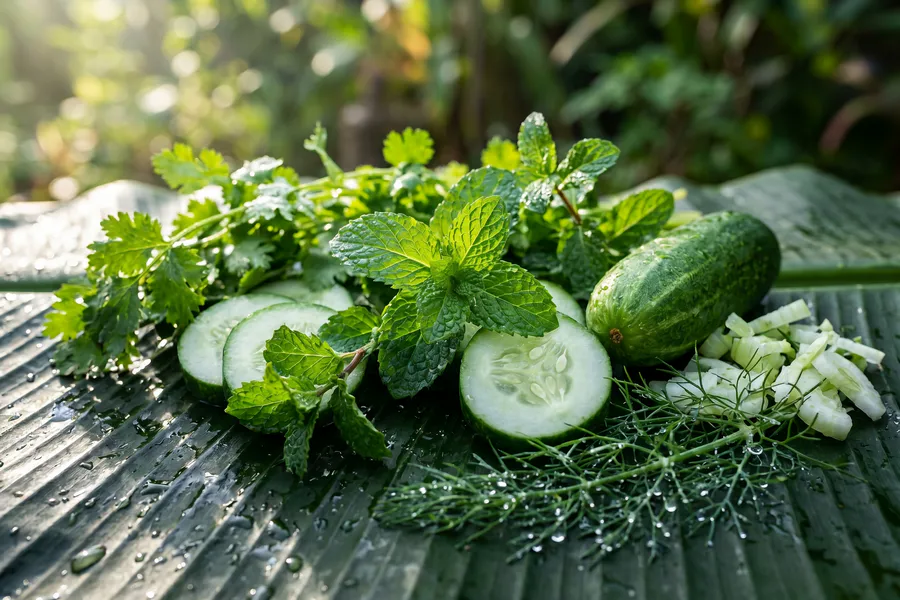
Among grains, rice, barley, and wheat are well-suited — they are nourishing but do not generate heat.
Bitter and astringent tastes are Pitta’s best allies. Bitter greens, arugula, dandelion leaves, and turmeric stimulate bile flow and help the liver metabolize excess heat. Moreover, astringent foods — pomegranate, apples, and well-cooked legumes — soothe the mucous membranes and reduce inflammation.
Coconut milk and coconut oil are exceptionally beneficial for Pitta. They cool from the inside, nourish the mucous membranes, and soften excess acidity. In addition, dairy products in moderate amounts — cold milk, ghee, and unsalted fresh cheese — help neutralize excess acid and calm Agni.
Sweet taste in the Ayurvedic sense — not sugar, but the natural sweetness of ripe fruits, grains, and root vegetables — balances Pitta and provides a sense of satisfaction without overheating.
What to Avoid
Pungent spices are the first thing to limit. Chili, large amounts of black pepper, mustard, and horseradish all add fuel to an already overheated fire.
Acidic foods — tomatoes, vinegar, excess fermented products, and citrus — increase stomach acidity and irritate the mucous membranes. Furthermore, alcohol is a direct Pitta amplifier. Even small amounts during a period of imbalance can trigger heartburn, skin reactions, and inflammation.
Fried and fatty foods place additional strain on the liver, which in Pitta constitutions is already working at high capacity. Skipping meals is also problematic — paradoxically, for Pitta this is more dangerous than overeating. An empty stomach with excess acid is a direct path to gastritis.
Spices and Herbs for Pitta
Spices for Pitta should be cooling or neutral. They support Agni without stoking it beyond what is needed.
Coriander is one of the best cooling agents for Pitta — it reduces inflammation and supports the liver. Fennel calms the intestines and reduces acidity; moreover, it works particularly well as a tea after meals. Cardamom cools and neutralizes excess heat. Turmeric is a powerful anti-inflammatory agent that supports the liver and bile production. Mint cools and soothes the mucous membranes throughout the digestive tract.
Among herbs, Shatavari deserves special attention. It coats and calms the mucous membranes of the digestive tract, reduces excess acidity, and supports liver function. In addition, Amalaki — Indian gooseberry and the base of Triphala — is one of the finest nourishing tonics for Pitta. It cools, cleanses the liver, and delivers an exceptional amount of vitamin C.
An Important Rule
For Pitta, the rhythm of meals is critically important — though for a different reason than with Vata. A skipped lunch means a fire burning without fuel. The result is excess acid, irritability, and inflammation. Therefore, eating regularly every 4–5 hours, with the main meal at midday when Agni is at its peak, is a foundational rule that resolves many Pitta symptoms on its own.
Kapha and Digestion
When the Fire Barely Smolders
Kapha is the energy of earth and water. In digestion, it provides protective moisture for the mucous membranes and maintains the structure and stability of intestinal tissues. Kapha digestion is the most stable of the three types. However, that stability easily tips into inertia. The fire doesn’t go out — it simply burns too quietly to handle the load.
The Kapha Digestion Profile
There is no appetite in the morning whatsoever. Breakfast feels unnecessary — the stomach hasn’t woken up yet, and forcing a meal produces heaviness rather than energy. However, appetite gradually builds through the afternoon, and by evening the urge to snack becomes almost irresistible.
A person with Kapha digestion can eat a small amount and feel completely full. The stomach takes a long time to empty. Moreover, a sense of heaviness after meals becomes so familiar that many people stop noticing it altogether.
Metabolism is slow and efficient. The body is remarkably good at extracting maximum nutrition from minimal food — an evolutionary advantage that, in today’s world of abundance, becomes a challenge. Weight accumulates easily from small amounts of food and is lost only with significant effort.
Another characteristic feature is emotional eating. Kapha people tend to reach for food when stressed, bored, or sad. For them, food represents comfort and stability. As a result, working with Kapha digestion requires attention not only to diet but also to the emotional landscape.
Signs of Kapha Imbalance in Digestion
Sluggish metabolism and weight gain are the most obvious signs. Even moderate eating leads to gradual accumulation, particularly around the abdomen, hips, and chest.
Heaviness and drowsiness after meals occur because Kapha digestion works slowly. While the body is occupied processing food, it redirects resources inward. Therefore, the urge to lie down after lunch is not laziness — it is a physiological response.
Mucus buildup — persistent coughing, nasal congestion, and frequent colds, especially in cold weather — reflects excess Kapha seeking an outlet. In Ayurveda, mucus is simply Kapha in excess.
Slow bowel movements and a sense of incomplete elimination are the result of sluggish peristalsis and a slowed metabolism. In addition, fluid retention and puffiness — particularly in the morning, around the face, hands, and feet — are characteristic of Kapha’s water-retaining nature.
Low mood, apathy, and a reluctance to move are states that intensify with Kapha imbalance and are directly connected to the quality of digestion.
What to Eat for Kapha Digestion
The guiding principle for Kapha is lightness, warmth, and stimulation. In other words, everything that awakens and kindles.
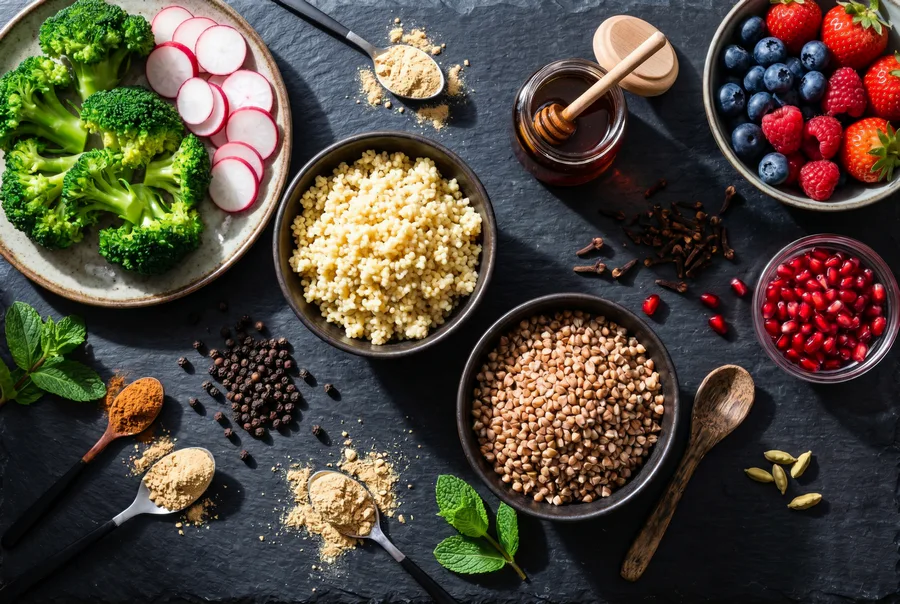
The foundation of the diet should be light cooked vegetables — leafy greens, broccoli, cauliflower, asparagus, radishes, and beets. Legumes are also well-suited to Kapha — they are light and nourishing and don’t create heaviness when properly prepared with spices.
Among grains, barley, buckwheat, millet, and corn are preferable — they are light and don’t produce mucus. Rice and wheat in excess, however, amplify Kapha.
Pungent, bitter, and astringent tastes are Kapha’s best allies. They stimulate Agni, accelerate metabolism, and help clear excess mucus. Among fruits, lighter and less sweet varieties are better: apples, pears, berries, and pomegranate. Bananas, avocado, figs, and dates in large quantities, however, amplify Kapha.
Old honey is the one sweet food Ayurveda recommends for Kapha. In small amounts and never heated, it has a drying and stimulating effect.
What to Avoid
Heavy, fatty, and dairy-rich foods — milk, cheese, yogurt, sour cream, and ice cream — are the primary Kapha amplifiers. They generate mucus, slow metabolism, and worsen all symptoms of imbalance. Furthermore, excess sweets — sugar, baked goods, and confectionery — are a direct path to weight gain and lethargy.
Cold food and drinks extinguish an already weak Agni. Therefore, it is especially important for Kapha to consume everything warm.
Daytime sleep is an enemy of Kapha digestion. It slows metabolism and intensifies all signs of imbalance. If rest is necessary, a short seated relaxation is a better option.
Excess food in the evening is particularly problematic for Kapha. A slow metabolism simply cannot process a late dinner, and food essentially “sets” in the digestive tract overnight.
Spices and Herbs for Kapha
Spices for Kapha should be warming, pungent, and stimulating. They kindle Agni, accelerate metabolism, and help clear mucus.
Ginger is the primary spice for Kapha. Whether fresh or dried, in tea or in food, it stimulates Agni more effectively than any other remedy. Black pepper is a powerful digestive stimulant that accelerates metabolism and helps with stagnation. Cloves warm and disinfect the digestive tract. Fenugreek stimulates Agni, supports sluggish metabolism, and helps regulate blood sugar. Turmeric cleanses and reduces inflammation — it is especially valuable for those prone to mucus buildup. Thyme and rosemary also work beautifully in cooking to support Kapha digestion.
Among herbs, Triphala is the most effective option for Kapha. Taken on an empty stomach in the morning, it gently stimulates peristalsis and helps eliminate accumulated waste. Moreover, ginger tea before meals — or in place of breakfast when there is no appetite — is one of the best tools for awakening Kapha Agni.
An Important Rule
For Kapha, movement matters more than the composition of the diet. Physical activity is not a supplement to eating — it is an integral part of it. A walk after a meal, morning exercise, or any movement throughout the day literally kindles Agni and jumpstarts metabolism. Therefore, the most effective combination for Kapha is a light breakfast or no breakfast at all, a substantial midday meal, and consistent activity throughout the day.
The Connection Between Emotions and Digestion: When Stress Extinguishes Agni
Ayurveda has known this for thousands of years. Modern neuroscience, however, only confirmed it in recent decades. The gut and the brain are not simply neighbors in the same body. Rather, they are two control centers engaged in constant two-way communication.
The Gut — A Second Brain
The walls of the intestine contain approximately 500 million neurons — more than the spinal cord. This neural network is called the enteric nervous system, and it operates largely autonomously, independent of the brain. As a result, scientists increasingly refer to the gut as the “second brain.”
However, what matters most is the direction of communication. Roughly 90% of signals traveling along the vagus nerve — the primary communication channel between the gut and the brain — travel upward, from the gut to the head. Not the other way around. This means that the state of the digestive system literally shapes emotional tone, the quality of thinking, and levels of anxiety.
Furthermore, approximately 95% of serotonin — the neurotransmitter that regulates mood, sleep, and a sense of wellbeing — is produced in the gut. When digestion is disrupted, serotonin production drops. As a result, no amount of external effort to improve mood will produce lasting results until the gut is healthy.
How Stress Extinguishes Agni
Ayurveda explains this connection through the concept of sympathetic activation. When a person is stressed, anxious, or angry, the sympathetic nervous system takes over. All of the body’s resources are redirected toward the fight-or-flight response. As a result, digestion shuts down — it simply isn’t needed when the body is preparing for a threat.
This is why food eaten in a rush, in irritation, or while scrolling through stressful news is not properly digested — even if it was perfectly chosen for your dosha. Agni is extinguished not by the wrong foods but by the wrong internal state.
Moreover, chronic stress makes this suppression permanent. Agni becomes systemically weakened. Ama accumulates. The gut microbiome deteriorates. Immunity declines — and notably, around 70% of immune cells are concentrated in the gut.
The Mindful Approach to Eating — An Ayurvedic Perspective
Ayurveda places demands on the act of eating that may seem unnecessarily strict at first glance. However, each one is backed by deep physiological reasoning.
Before eating — take a few seconds of conscious presence. Look at the food, notice its aroma, and mentally prepare for what is about to happen. This is not a ritual for its own sake. Scientists have established that simply looking at food triggers the production of digestive enzymes in the pancreas. Therefore, those who eat without paying attention are literally depriving themselves of the enzymes needed to digest their own meals.

During eating — maintain complete quiet and eliminate all distractions. No screens, no phones, no multitasking or work conversations. When the mind is occupied elsewhere, the communication channel with the digestive system weakens and it loses some of its guiding signals from the brain.
The emotional atmosphere at the table has direct physiological significance. Eating in anger, anxiety, or sadness always produces Ama. Food consumed during sympathetic activation is not fully digested and effectively becomes a toxin in the body.
In contrast, eating in calm, with gratitude and genuine attention to the process, activates the parasympathetic system — often called “rest and digest.” It is only in this state that Agni operates at full capacity.
The Microbiome as a Mirror of Lifestyle
Current research shows that the composition of gut flora can shift within just a few days in response to diet, stress, sleep, and physical activity. The microbiome is not static — it responds to every decision made throughout the day.
Ayurveda described this dynamic long before microbiology existed, through the concepts of Agni and Ama. A balanced Agni creates an environment in which beneficial microorganisms thrive. A weakened one, however, opens the door to pathogenic flora.
When Agni Is Disrupted: Ayurvedic Digestive Disorders
Modern medicine describes digestive diseases through anatomy and biochemistry — where exactly the inflammation is, which organ is affected, which marker is out of range. Ayurveda, however, asks a different question: which dosha fell out of balance, and why did Agni fail? These are not competing approaches — they simply look at the same thing from different angles. Together, moreover, they provide a significantly more complete picture.
Ajeerna — Indigestion
Ajeerna is the foundational digestive disturbance from which most more serious conditions develop. In everyday language, it is what people call “heaviness after eating,” “indigestion,” or an “upset stomach.”
In Ayurvedic understanding, the cause is always the same — a weakened or imbalanced Agni. Food arrived but was not properly processed. Instead of nourishing essence, Ama was produced.
Symptoms include heaviness and a bloated feeling after meals, belching, unpleasant breath, a white coating on the tongue, and post-meal sluggishness. It most commonly occurs as a result of overeating, eating in a hurry, or consuming incompatible foods.
Amlapitta — Acid Reflux and Hyperacidity
Amlapitta translates literally as “sour Pitta.” It is the Ayurvedic term for conditions that modern medicine describes as gastritis, acid reflux, GERD, and hyperacidity.
The mechanism is straightforward. Excess Pitta overheats the stomach acid beyond what is needed. Too much acid is produced, and it begins to irritate the mucous membranes of the stomach and esophagus. Furthermore, spicy, acidic, and fatty foods worsen the situation immediately.
Symptoms include heartburn, a burning sensation behind the sternum, a sour taste in the mouth, and nausea — particularly in the morning. In addition, irritability and heightened sensitivity to heat often accompany this condition.
The Ayurvedic approach involves a cooling diet, eliminating spicy and acidic foods, and using Shatavari and Amalaki to restore the mucous membranes. Avipattikar Churna is also used to neutralize excess acid.
Grahani — Irritable Bowel Syndrome
In Ayurveda, Grahani refers to a dysfunction of the small intestine — the site of primary nutrient absorption. In modern classification, this condition most closely corresponds to irritable bowel syndrome.
The defining characteristic of Grahani is alternation: constipation one day, diarrhea the next, normal stools the day after. The intestine simply cannot find its rhythm. At its root lies a simultaneous imbalance of Vata and Pitta against a backdrop of chronically weakened Agni.
Stress and anxiety are the primary triggers for flare-ups. This is why Grahani is often called a “nervous gut condition” — the link between emotional state and symptoms is particularly clear here.
Symptoms include unstable bowel movements, bloating, abdominal cramping, a sense of incomplete elimination, and mucus in the stool. Moreover, symptoms consistently worsen under stress, with irregular eating, and after consuming incompatible foods.
The Ayurvedic approach begins with restoring Agni as the first step. A gentle diet during flare-ups — kitchari, warm soups, cooked vegetables — is recommended. Triphala helps regulate bowel movements. Furthermore, stress management through pranayama and meditation is considered an essential part of treatment, not optional.
Vibandha — Constipation
Vibandha is a classic Vata disorder. Dryness, cold, and irregularity — the defining qualities of Vata — disrupt peristalsis and dry out the contents of the intestine.
In modern life, constipation has become so widespread that many people consider it normal. Ayurveda, however, strongly disagrees. A daily, effortless morning bowel movement is a baseline indicator of healthy Agni and a well-functioning digestive system.
Symptoms include infrequent, hard stools, a sense of incomplete elimination, bloating, gas, and headaches — the result of toxins that are not being cleared on time.
In Ayurvedic understanding, the causes include dehydration, insufficient healthy fats in the diet, excess raw and cold food, irregular meal timing, suppression of natural urges, and chronic stress.
The Ayurvedic approach starts with a glass of warm water on an empty stomach every morning — without exception. Small daily amounts of ghee are also recommended. Triphala taken at night, abhyanga — warm oil self-massage — to calm Vata, and consistent movement throughout the day all play an important role as well.
Agnimandya — Chronically Weak Fire
Agnimandya is not an acute condition — it is chronic. The fire does not go out completely, but it burns so quietly that it can no longer do its job. Moreover, in Ayurvedic understanding, most chronic diseases — from autoimmune conditions to cancer — begin with Agnimandya.
The greatest danger of Agnimandya is that it develops invisibly. A person gradually adapts to their state — chronic post-meal fatigue, persistent heaviness, a weakened immune system, steady weight gain — and begins to accept it as normal.
Symptoms include constant heaviness after meals regardless of portion size, chronic fatigue, poor immunity with frequent colds and slow healing, steadily increasing weight without changes in diet, brain fog, reduced concentration, and a persistent tongue coating every morning.
The Ayurvedic approach here is systemic. It involves restoring the daily routine, eating warm nourishing food, incorporating Agni-kindling spices, seasonal detoxification, and addressing the sources of chronic stress.
Deepening the practice of cleansing — clearing the digestive tract at both the physical and energetic levels — is a subject that deserves its own dedicated exploration. For those interested in going further, the article “Shatkarmas: Six Cleansing Practices That Yoga Textbooks Don’t Talk About” is a natural next step.
Universal Ayurvedic Eating Rules
What Works for Everyone — Regardless of Dosha
Eating for your dosha is about personalization. However, Ayurveda also identifies principles that are universal — they support Agni and prevent Ama accumulation in any person, regardless of their constitution. These are not restrictions or diets. Rather, they are a way of building a relationship with food so that it genuinely nourishes instead of depleting.
Rule One — Don’t Snack
Every time something enters the mouth — even a single berry, even a sip of coffee with milk — the digestive system restarts from scratch. Enzymes are produced. Stomach acid is activated. The pancreas switches on, and the liver redirects its resources.
When this happens every hour or two, the digestive organs never get a chance to recover. As a result, enzyme activity declines, bile production worsens, and the liver becomes overburdened. What seemed like a harmless snack, therefore, becomes a pattern of systematic exhaustion.
Both Ayurveda and modern nutrition agree on this point: eat no more frequently than once every 3–4 hours. This is the minimum time the system needs to complete a full digestive cycle and restart at full capacity.
Rule Two — Plate Size and Color Matter
This is not a metaphor. Back in the 19th century, psychologist Delboeuf described an optical illusion that directly affects how much we eat. The same volume of food looks smaller on a large plate — and sufficient on a small one. In other words, the brain receives satiety signals not only from the stomach but also from what the eyes see.
Research confirms this. People who eat from plates 20–22 centimeters in diameter — instead of the standard 28–30 — consume 20–30% fewer calories. Notably, they feel no hunger or sense of restriction.
Plate color matters too. Warm tones — red, orange, yellow, and white — stimulate appetite. Dark and cool colors — dark blue, gray, and black — do not amplify food arousal. As a result, they allow a person to eat in line with their actual needs.
Rule Three — Mindset and Mindfulness at the Table
Before eating, take a few seconds of conscious presence. Look at the food, notice its aroma, and mentally prepare. This simple act triggers pancreatic enzyme production before the first bite is even taken.
During the meal, eliminate all screens, phones, and work conversations. When attention is divided, the digestive system loses its guiding signals from the brain. It therefore operates at reduced capacity.
The emotional atmosphere at the table matters just as much as the food itself. Stress, anger, and anxiety activate the sympathetic nervous system and literally block digestion. Food eaten in a bad mood is always less well-digested — however carefully it was prepared.
Ayurveda adds one more layer to this. Eating in silence, with genuine gratitude, activates the parasympathetic system. In this mode, Agni operates at full strength.
Rule Four — The Half Rule
The Sushruta Samhita — one of the oldest Ayurvedic texts — gives clear guidance. Fill half the stomach with solid food, a quarter with liquid, and leave a quarter empty. That space allows digestive juices to circulate freely and do their work.
Chronic overeating stretches the stomach walls. Over time, it requires ever-larger amounts of food to produce a sense of fullness. As a result, every subsequent link in the digestive chain becomes overburdened. Gradually reducing portions, however, gives the stomach time to return to its natural size — and restores a normal sense of satiety.
The marker of the right portion is simple. After eating, there should be lightness and satisfaction — not heaviness and the urge to lie down.
Rule Five — Warm Water Instead of Cold Drinks
Cold water during meals is one of the most widespread habits that systematically weakens Agni. It literally extinguishes the digestive fire — in the same way that cold water extinguishes a flame. As a result, food stops being properly digested, fats congeal, and enzymes work less effectively.
Warm water, in contrast, supports Agni, stimulates peristalsis, and helps eliminate Ama. In fact, a glass of warm water on an empty stomach in the morning is one of the simplest and most effective Ayurvedic tools for activating the digestive system after a night’s rest.
Ginger tea before meals is an amplified version of this rule. Additionally, a small piece of fresh ginger or a cup of ginger tea 15–20 minutes before eating kindles Agni and prepares the digestive system for the work ahead.
Rule Six — Make Lunch the Main Meal
Agni, like everything in nature, follows daily rhythms. Its peak falls in the middle of the day — approximately between 12 and 3 p.m. During this window, the digestive fire is at its strongest, enzymes are produced in maximum quantities, and metabolism runs at its fastest.
Therefore, Ayurveda recommends making lunch the main meal of the day — the most substantial and varied. Breakfast, in turn, should be light and warm, while dinner should be early and small. A large late dinner arrives when Agni is already winding down and almost inevitably becomes Ama.
Rule Seven — Go to Bed by 10 p.m.
This rule may seem unrelated to nutrition — but only at first glance. In Ayurveda, each dosha governs a specific window of the day. From 6 to 10 p.m., Kapha is active — a time of slowing down and preparing for rest. After 10 p.m., Pitta takes over with its active, transforming energy. If a person is still awake at that point, Pitta awakens appetite, and a late dinner or nighttime snack becomes almost inevitable.
Modern nutrition confirms this from another angle. During sleep, the glymphatic system actively works — clearing neurotoxins from the brain. Melatonin production, moreover, peaks between 11 p.m. and 3 a.m. Missing this cycle therefore means accumulating toxins not only in the gut but in the brain as well.
Good sleep is overnight detoxification. In other words, the best thing one can do for tomorrow’s digestion is to go to bed on time tonight.
Rule Eight — Include All Six Tastes in Every Meal
Ayurveda identifies six tastes: sweet, sour, salty, pungent, bitter, and astringent. Each one carries a distinct physiological function and influences the doshas differently. When all six are present in the diet, the body receives a complete spectrum of nutritional signals. As a result, satiety arrives more quickly and the urge to overeat diminishes naturally.
Bitter taste, in particular, deserves special attention. It stimulates bile flow, supports liver function, and helps metabolize hormones — estrogen especially. Moreover, a few leaves of arugula, a small piece of broccoli, or a bitter herbal tea at the end of a meal gradually restores taste receptor sensitivity and reduces sugar cravings.
Rule Nine — Eat Seasonally
The gut microbiome is not static — it shifts with the changing seasons. In fact, current research shows that the gut flora of people who eat seasonally is significantly more diverse and resilient than that of those who eat the same foods year-round.
Ayurveda described this long ago through the concept of Ritucharya — the seasonal rhythm of life. Spring calls for light, cleansing foods that help clear accumulated winter Kapha. Summer is the season for cooling choices that support Pitta balance. As fall arrives, warm and nourishing meals prepare the body for the colder months ahead. Deep winter, in turn, calls for warming and strengthening foods to support Vata.
These are guidelines rather than rigid rules, yet they play an enormous role in digestion. The body naturally signals what it needs in each season — provided, however, Agni is strong enough to send those signals clearly.
For those ready to take a first practical step toward restoring Agni and clearing accumulated Ama, the “Easy Detox,” “3-Day Detox,” and “7-Day Detox” programs were created precisely for this purpose. Each one offers gentle, conscious cleansing grounded in Ayurvedic nutritional principles.
Herbs and Practices for Digestive Support
The Ayurvedic Pharmacy for Everyday Use
Ayurveda never considered herbs a substitute for a healthy lifestyle. Rather, a herb is a support — an amplifier, a precision tool. It works at full capacity only when Agni has already been sufficiently restored to absorb its active compounds. This is precisely why the principle exists: agni first, then herbs.
Triphala — A Universal Tonic for All Three Doshas
Triphala — literally “three fruits” — is a classical Ayurvedic formula. It has been in use for over two thousand years. The blend contains three berries: Amalaki (Indian gooseberry), Haritaki, and Bibhitaki.
 Together, they form a formula with broad digestive benefits. It gently regulates bowel movements and cleanses the intestine of accumulated Ama. Moreover, it supports the microbiome and nourishes the mucous membranes. Additionally, Triphala does not cause dependency. It is therefore suitable for long-term use.
How to use it: one teaspoon of powder in a glass of warm water. Take it in the evening before bed to regulate bowel movements, or in the morning on an empty stomach for cleansing.
Ginger — A Universal Remedy for Agni
If Ayurveda has one universal spice for digestion, it is ginger. It is referred to in Ayurvedic texts as “vishvabheshaj” — the universal medicine. Not because it cures everything, but because it addresses the root of most digestive problems — weakened Agni.
Fresh ginger kindles the digestive fire, stimulates the production of digestive enzymes, relieves nausea, reduces bloating, and improves peristalsis. A small piece of fresh ginger with a pinch of salt and a drop of lemon juice 15–20 minutes before a meal is a classical Ayurvedic practice for preparing Agni.
Dry ginger is more warming and pungent — it is better suited to Kapha and Vata. Fresh ginger is milder and works well for all three doshas. However, Pitta types should limit the amount during periods of imbalance.
Ginger tea throughout the day is furthermore one of the most accessible tools for clearing Ama and maintaining Agni between meals.
Turmeric — The Anti-Inflammatory Guardian of the Gut
In Ayurveda, turmeric belongs to the category of herbs that simultaneously cleanse, warm, and protect. Its active compound — curcumin — is one of the most extensively studied natural anti-inflammatory substances available.
For digestion, turmeric is especially valuable because it supports the liver — the primary organ of metabolism. It stimulates bile production, improves fat digestion, and helps eliminate toxins. Furthermore, in inflammatory gut conditions — gastritis, colitis, and irritable bowel syndrome — turmeric reduces irritation of the mucous membranes.
One important detail: curcumin is poorly absorbed on its own. Its bioavailability, however, increases dramatically when combined with black pepper and fat. Therefore, golden milk — warm milk with turmeric, black pepper, and ghee — is not simply a pleasant drink. It is a carefully designed Ayurvedic formula.
Ajwain — Fast Relief for Bloating
Ajwain, or carom seeds, is a spice that receives far too little attention outside of Indian cooking. Yet in terms of effectiveness for bloating, gas, and intestinal cramping, it has no equal among readily available spices. In addition, its flavor closely resembles thyme — though its therapeutic properties are considerably more powerful.
Ajwain has a pronounced carminative action — it relieves spasms of the smooth intestinal muscle and helps expel gas. It is particularly effective for Vata imbalance. Moreover, adding ajwain when cooking legumes significantly reduces their gas-producing effect.
A simple remedy: chew a pinch of ajwain seeds and wash them down with warm water at the onset of acute bloating. The effect typically arrives within 15–20 minutes.
Coriander and Fennel — Coolers and Soothers
These two spices are especially valuable for Pitta constitution, yet beneficial for any digestive type. Together, they form one of the most effective cooling and calming pairs in the Ayurvedic kitchen.
Known for its cooling properties, coriander reduces excess heat in the digestive tract, supports liver and kidney function, and soothes inflamed mucous membranes. Furthermore, a tea made from coriander seeds is one of the best drinks available for acidity and heartburn.
Fennel after meals is a classical Ayurvedic practice. Fennel seeds calm the intestines, relieve cramping, reduce bloating, and freshen the breath. It is no coincidence that fennel seeds are served at the end of every meal in India — this is not merely tradition but a conscious act of supporting Agni.
Abdominal Abhyanga — Self-Massage for Digestion
Abhyanga — warm oil self-massage — takes on particular significance in the context of digestion when the focus is placed on the abdominal area. Warm oil applied in clockwise circular movements over the abdomen gently stimulates peristalsis, relieves spasms, and improves circulation to the abdominal organs.
For Vata — warm sesame oil with a few drops of ginger or cardamom essential oil. Pitta — coconut oil at room temperature. And or Kapha — a light dry massage or a small amount of mustard oil.
Just 5–7 minutes of this massage in the morning on an empty stomach or in the evening before bed sends the intestine a signal for gentle activation. It is furthermore especially effective for chronic constipation and bloating.
Vajrasana After Meals — The Pose That Aids Digestion
Vajrasana — sitting on the heels — is the only yoga asana recommended immediately after eating. It gently activates circulation in the pelvic organs and abdominal cavity, supports Agni, and helps initiate the digestive process.
Spending 5–10 minutes in Vajrasana after the main meal is a simple practice that noticeably reduces post-meal heaviness, decreases bloating, and supports the natural rhythm of digestion.
For those who find sitting on their heels uncomfortable, a folded blanket or yoga block placed beneath the ankles works well. The key elements are a straight spine and calm, steady breathing.
Pavanamuktasana — The Wind-Relieving Pose
The name speaks for itself: “pavana” means wind, and “muktasana” means the pose of release. This asana is performed lying on the back. With one or both knees drawn toward the chest and held there with the hands.
Pavanamuktasana gently massages the intestine, stimulates peristalsis, and helps expel accumulated gas. It is particularly effective for Vata imbalance and works well in the morning after waking or in the evening before bed.
Hold the pose for 30–60 seconds on each side, breathing slowly and deeply. Three to five repetitions give the intestine a gentle but meaningful stimulus for movement.
For those who want to go deeper into cleansing practices and body work at all levels — physical and energetic — the Vedic Knowledge Club brings together programs that unite Ayurvedic wisdom with living practice.
Conclusion
Digestion Is the Foundation
The modern world offers an endless number of diets, nutrition systems, and detox programs. Some eliminate carbohydrates, others ban fats. And still others prescribe eating strictly by the clock or consuming only raw food. Each system has its own logic. However, none of them asks the most important question: is this particular body, right now, actually capable of digesting what is being offered to it?
Ayurveda begins precisely with that question. Moreover, it answers it not with a universal formula but with a system of understanding — through the doshas, through Agni, and through the individual constitution of each person.
Three core principles run through everything covered in this article:
First — digestion matters more than the composition of the diet. A perfectly chosen meal will not deliver results if Agni is weak. Therefore, restoring the digestive fire is always the first step. Everything else is built on that foundation.
Second — the body speaks its own language. A tongue coating, the nature of appetite, how you feel after eating, the quality of sleep — these are not random symptoms. Rather, they are precise information about the state of Agni and the doshas. Learning to read that information makes it possible to adjust the diet long before serious disorders appear.
Third — change does not require heroic effort. A glass of warm water in the morning. Ginger tea before lunch. A few leaves of arugula at the end of dinner. Vajrasana after a meal. Going to bed by 10 p.m. Each of these actions is small and entirely accessible. Together, however, applied consistently day after day, they shift the state of Agni. The quality of digestion, and — as a result — energy levels, mental clarity, and overall wellbeing.
Digestion is not simply the process of breaking down food. It is the capacity to assimilate life in its fullest sense: nutrients, experience, emotions, and change. Furthermore, when Agni is strong, the body handles all of it with ease.
This article is for informational purposes only. And is not a substitute for professional medical advice. Before making changes to your diet or starting any Ayurvedic practices, consult your doctor. Especially if you have chronic gastrointestinal conditions.
Related Posts

What Is a Dosha: The Three Energies That Define Our Nature
Ayurveda is one of the oldest systems of medical knowledge in the world. Its history…

Hormones and Women’s Health Through the Doshas: An Ayurvedic Perspective on Balance
Contents: Introduction What Are Hormones and Why Do They Fall Out of Balance? The Ayurvedic…

Skin by Dosha: Why Acne, Dryness and Inflammation Appear
«The radiance of the skin, its even tone, softness and delicacy — these are the…