
Neurosensory Therapy: Brain Biohacking Without Pills for Anxiety, Depression, and ADHD
Contents
- Introduction
- What Is Neurosensory Therapy
- Audio-Visual Entrainment (AVE)
- Vibroacoustic Therapy
- Binaural Beats and Brainwave Harmonization
- Aromatherapy
- Mindfulness Meditation
- Precautions
- Conclusion
Introduction
Anxiety that will not let go. Depression that arrives in waves. Concentration that collapses at the first distraction. These are all signals from a brain that has lost its ability to regulate itself.
The brain has two conductors. The first is the conscious mind — the one reading these words right now. It analyzes situations and makes decisions. The second is the deep brain, located in the hypothalamus. It manages everything that happens in the body without your awareness: heartbeat, breathing, digestion, hormones, and immunity. This is the part that controls the autonomic nervous system and its two branches. The sympathetic branch triggers the fight-or-flight response. The parasympathetic branch governs rest and recovery.
When these systems are in balance, a person feels alive, focused, and resilient. When that balance breaks down, anxiety, insomnia, chronic fatigue, and pain follow. Conventional medicine typically addresses this with medication.
Biohacking offers a different path. There is a group of methods that work not chemically, like pills, but physically — through frequencies, vibration, and sensory stimulation. These approaches help the brain and body tune into a healthy rhythm.
What Is Neurosensory Therapy
Neurosensory therapies are non-pharmacological methods of influencing the brain and nervous system through the senses: hearing, sight, touch, and smell. Unlike pharmacology, they do not alter brain chemistry directly. Instead, they use physical phenomena — sound waves, light pulses, vibration, and scent — to guide brain activity toward a desired state.
Brainwaves are the electrical activity of neurons, measurable by EEG. Different frequencies correspond to different states. Delta waves are associated with deep sleep. Theta waves relate to meditation and creativity. Alpha supports relaxed focus. Beta drives active thinking. Gamma is linked to peak cognitive performance. Neurosensory therapies use external stimuli to gently nudge the brain toward a target frequency. This process is called brainwave entrainment.
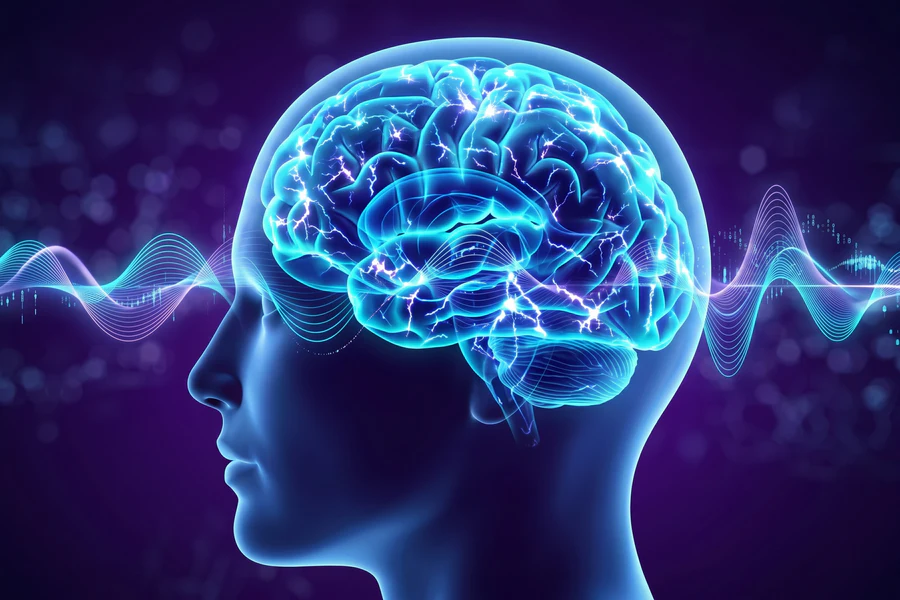
This is precisely why these methods are particularly effective for mental health. They act directly on the limbic system — the emotional center — and the cerebral cortex. Research supports their use for anxiety disorders, depression, chronic stress, burnout, ADHD, sleep disruption, and cognitive decline.
The main neurosensory methods include audio-visual entrainment, vibroacoustic therapy, binaural beats, aromatherapy, and mindfulness meditation. Each has its own mechanism, strengths, and scientific foundation.
Audio-Visual Entrainment (AVE)
Audio-visual entrainment is one of the most thoroughly studied tools in neurosensory therapy. AVE devices work on the brain through two channels simultaneously: light pulses delivered through specialized glasses and auditory tones through headphones. Both signals pulse at the same frequency. This encourages brainwaves to synchronize with them — a process known as brainwave entrainment.
How It Works
Each AVE session improves cerebral blood flow by approximately 28%. It also stimulates the production of neurotransmitters including serotonin, norepinephrine, and endorphins. As people age, cerebral circulation naturally declines, which contributes to cognitive deterioration. AVE actively works against this process by supporting the brain’s nutritional supply.
Sessions are grouped by purpose. Energize is used in the morning for alertness as a caffeine alternative. Brain Booster improves concentration, memory, and focus — particularly effective for ADHD in adolescents and adults. Sleep helps transition from anxious wakefulness into a sleep-ready state. Feeling Better reduces negative thoughts and lifts mood. The Mood Booster session, with its meditative introduction, works well for generalized anxiety.
What the Research Shows
Three independent studies conducted with elderly residents in care homes produced consistent findings. Tom Budzynski’s study of 31 participants showed significant improvement in spatial reasoning and a reduced risk of falls. Chris Palmquist’s work with 42 participants found improvements in both working and long-term memory — while the control group showed decline. Kathy Berg’s study of 80 participants recorded pronounced reductions in depression and improved balance after eight weeks of using the Mood Booster session.
AVE is used for depression, anxiety, ADHD, insomnia, chronic pain, and cognitive decline. For those seeking to maintain peak brain performance rather than treat a disorder, AVE remains one of the most accessible biohacking tools available.
Vibroacoustic Therapy
Vibroacoustic therapy involves exposing the body to low-frequency sound vibrations that are not only heard but physically felt. A person lies on a specialized table or mattress fitted with transducers — devices that convert sound into vibration and deliver it directly into the body’s tissues, organs, and bones. It works like a massage from the inside.
How It Works
Low-frequency vibrations penetrate deep into the body and act on several levels at once. At the level of the nervous system, they activate the parasympathetic branch — the rest-and-recovery mode that chronic stress tends to suppress. The result includes lower blood pressure, improved digestion, reduced muscle tension, and restored immune function.
At the level of the brain, vibrations stimulate the medial geniculate body and the temporal lobes — structures involved in sound processing, emotion, and memory. This explains why vibroacoustic therapy affects not only physical wellbeing but emotional tone as well. It helps process stress, reduces anxiety, and creates a deep state of relaxation comparable to meditation.
At the cellular level, vibration activates mitochondrial energy centers, stimulates lymphatic drainage, and improves microcirculation. For more on the role of mitochondria in recovery, see the article “The Cell’s Energy Source: How Your Body Works From the Inside Out.”
Where It Is Used
Vibroacoustic therapy has shown results in chronic pain, arthritis, back pain, post-injury rehabilitation, and sports recovery. Some studies have documented improvements in cerebral palsy and Parkinson’s disease. In the context of mental health, it is widely used for chronic stress, anxiety, and burnout — conditions where physical tension and emotional exhaustion are inseparable.
A session lasts between 30 and 60 minutes. Many people describe it as a state of profound calm, after which the body feels renewed and the mind feels clear.
Binaural Beats and Brainwave Harmonization
Binaural beats are an auditory phenomenon produced in the brain when two tones of slightly different frequencies are heard simultaneously. When the left ear receives a tone of 200 Hz and the right ear receives 210 Hz, the brain perceives the difference as a third, illusory sound at 10 Hz. This “phantom” rhythm is the binaural beat. Stereo headphones are essential — without them, the effect does not occur.
Frequencies and Brain States
Different binaural beat frequencies correspond to different states of consciousness. The delta range (0.5 to 4 Hz) is linked to deep sleep and recovery. Theta (4 to 8 Hz) relates to meditation, creativity, and reduced anxiety. This range is also associated with lower cortisol and modulated serotonin. Alpha (8 to 13 Hz) supports relaxed focus. Beta (13 to 30 Hz) drives concentration and active thinking. Gamma (above 30 Hz) is linked to peak cognitive performance, attention, and a sense of wellbeing.
What the Research Shows
A systematic review of 17 randomized clinical trials found that auditory brainwave stimulation was more effective than the control condition in 82% of cases. Documented effects included improved attention and memory, reduced anxiety, relief from chronic pain, and improvement in motor symptoms associated with Parkinson’s disease.
That said, the science in this area remains mixed. Some studies support the brainwave entrainment hypothesis, while others find no significant effects. Methodological differences across studies currently prevent definitive conclusions. This does not mean the method is ineffective — the evidence base is simply still developing.
Practical Use
Binaural beats are most effective for anxiety, stress, sleep disturbances, and concentration difficulties. They are also used to deepen meditation and as support for tinnitus. Sessions typically last 15 to 30 minutes. Stereo headphones are essential, and a calm environment without parallel cognitive tasks is important. One study of 1,000 participants found that listening to binaural beats during active mental work can reduce task performance.
Aromatherapy
Of all neurosensory methods, aromatherapy is the fastest and most accessible. Scent is the only sensory signal that reaches the limbic system almost instantly, bypassing longer neural pathways. Olfactory receptors connect directly to the amygdala and hippocampus — the structures that govern emotion, memory, and the stress response. This is why a scent can shift mood, trigger memories, and reduce anxiety more quickly than any other method.
How Essential Oils Work on the Brain
When essential oil molecules are inhaled, they activate olfactory receptors in the nose. These receptors send signals directly to the limbic system. This sets off a cascade of neurochemical reactions: cortisol levels drop, brain regions linked to relaxation and positive emotion become active, and heart rate variability normalizes.
Different oils produce different effects. Lavender and sandalwood reduce anxiety and improve sleep. A randomized controlled trial with women awaiting biopsy found statistically significant anxiety reduction with lavender compared to placebo. Rosemary improves cognitive function and task speed. Peppermint enhances concentration and alertness. Sandalwood helps focus the mind before meditation. Bergamot and citrus oils lift mood and reduce apathy.
A meta-analysis of 12 studies found that aromatherapy improved sleep quality in 95% of cases. Notably, inhalation proved more effective than massage with oils. A separate study of 42 office workers found that those using a petitgrain essential oil diffuser completed cognitive tasks 2.28 minutes faster than the control group.
Aromatherapy and Biohacking
In a biohacking context, aromatherapy is a tool for managing mental state. In the morning, citrus and mint oils serve as a caffeine alternative. Before work, rosemary and sandalwood create conditions for focus. In the evening, lavender and chamomile prepare the nervous system for recovery. Before meditation, sandalwood and frankincense deepen the practice.
For more on how to use essential oils correctly, see the article “How to Use Essential Oils.”
Mindfulness Meditation
Meditation is the oldest neurosensory tool. Thousands of years of practice, and now decades of neuroscience explaining why it works. The brains of long-term meditators age more slowly. Gray matter volume in regions linked to self-regulation and emotional control is better preserved. Neuroimaging data confirms this.
What Happens to the Brain During Meditation

Regular practice produces structural changes in the brain. Cortical thickness increases in the hippocampus and prefrontal cortex — areas responsible for memory, learning, and decision-making. Activity in the default mode network decreases — the network that generates intrusive thoughts and self-criticism. Reactivity in the amygdala, the main trigger for anxiety and stress, is reduced. Connectivity between different brain regions improves, resulting in more integrated and flexible system-wide function.
A study by Hölzel et al., published in Psychiatry Research: Neuroimaging, showed that eight weeks of mindfulness meditation practice is sufficient to produce a measurable increase in hippocampal cortical thickness. This means the brain responds to meditation the same way muscles respond to exercise — it grows and strengthens.
Conditions Where Meditation Is Most Effective
Mindfulness meditation has shown the greatest effectiveness for ADHD and attention difficulties, anxiety disorders and panic attacks, recurrent depressive episodes, and age-related cognitive decline. A study published in the Journal of Alzheimer’s Disease found that regular meditation practice may reduce the risk of dementia. Separate research demonstrates its effectiveness for chronic pain — comparable to cognitive behavioral therapy.
In addition, meditation is a powerful tool for enhancing other neurosensory practices. It amplifies the effects of binaural beats, increases receptivity to vibroacoustic therapy, and makes aromatherapy more effective.
How to Begin
Starting does not require long sessions. For the first three days, five minutes is enough — simply observing the breath without forcing focus. When thoughts wander, that is normal. The moment you notice and return your attention is the training. Gradually, sessions can extend to 10–15 minutes. Research points to eight weeks of regular practice as the minimum for achieving lasting results.
To deepen your practice and make it part of daily life, explore the course “Inner Support 1.0.”
Precautions
Neurosensory therapies are gentle and non-invasive methods. Nevertheless, they work with the brain’s electrical activity and the nervous system. In certain situations, caution or complete avoidance is warranted.
Epilepsy
AVE devices use flickering light that may trigger a seizure in people with photosensitive epilepsy. Binaural beats and vibroacoustic stimulation can also affect brain electrical activity in unpredictable ways. For any form of epilepsy, neurological consultation is necessary before using these methods.
Cardiac Pacemaker
Vibroacoustic therapy — particularly versions using powerful speakers or magnetic elements near the chest — can interfere with a pacemaker’s function. People with implanted cardiac devices should avoid vibroacoustic therapy.
Acute Psychosis and Schizophrenia
Altered states of consciousness that may arise during intensive AVE sessions, deep meditation, or vibroacoustic therapy can worsen acute psychotic conditions. These methods are contraindicated during active episodes.
Pregnancy
The effects of intense vibration and sound stimulation on the developing fetus are not yet adequately studied. As a precaution — particularly in the third trimester — vibroacoustic therapy and intensive AVE sessions are best avoided. Gentle aromatherapy and meditation are generally considered safe during pregnancy. However, the choice of essential oils requires individual guidance from a qualified specialist.
Conclusion
Neurosensory therapies are biohacking tools that operate at the physiological level. They restore balance to the nervous system, train neuroplasticity, and help the brain return to healthy rhythms. Their primary goal is to restore the body’s capacity for self-regulation.
Each method covered here has its own point of application. AVE is suited for rapid shifts in brain state and for working with ADHD, depression, and insomnia. Vibroacoustic therapy provides deep relaxation of the nervous system and addresses physical tension and pain. Binaural beats offer gentle state tuning through sound. Aromatherapy provides immediate access to the limbic system through smell. Meditation supports long-term structural change in the brain and resilience to stress.
Biohacking begins with the understanding that every tool has its place. Combining methods creates a synergistic effect — and that is where the true potential of neurosensory therapy becomes apparent.
This material is for informational purposes only and does not constitute medical advice, diagnosis, or a treatment guide. Before using any of the methods described, especially in the presence of neurological or psychiatric conditions, please consult a qualified healthcare professional.
Related Posts

Liquid Amino Acids: Kitchen Biohacking for Tasty and Healthy Eating
Table of Contents Introduction What Are Liquid Amino Acids Amino Acids and Protein: What Is…

Seasonal Depression: What a Lack of Light Does to the Brain and How Biohacking Can Help
Contents Introduction What Is Seasonal Depression Why Light Is Missing: The Biochemical Mechanism The History…

Light Deprivation: Why You Are Tired, Low, and Gaining Weight
Contents Introduction Light as a Nutrient: What Happens in the Cell How Light Controls the…