
Liquid Amino Acids: Kitchen Biohacking for Tasty and Healthy Eating
Table of Contents
- Introduction
- What Are Liquid Amino Acids
- Amino Acids and Protein: What Is the Difference?
- Myths About Heat and the Stomach
- Culinary and Sports Amino Acids
- Benefits in the Kitchen
- How to Use Liquid Amino Acids
- Who Should Be Careful
- Conclusion
Introduction
Anyone who has ever tried to eat consciously has run into the same tension: eat well or eat healthy? Food that is good for you tends to feel bland. Food that tastes great tends to come with guilt. This friction is not a personal failing — it is a structural problem of modern nutrition.
For thousands of years, humanity has searched for ways to make food more satisfying. Spices were the first elegant solution, transforming simple ingredients into something worth savoring. Later, as food chemistry advanced, flavor enhancers appeared. The most well-known is monosodium glutamate — MSG. Its reputation is mixed, and the fear of “chemicals in food” is understandable.
Biohacking approaches this differently. Instead of choosing between taste and health, it looks for tools that deliver both. Liquid amino acids are exactly that kind of tool. They are not a trendy supplement or a marketing invention. They are a concentrated seasoning with a long history. A few drops can turn an ordinary vegetable soup into something with restaurant-level depth. No excess salt, no gluten, no synthetic additives.
Umami is the fifth taste. It is responsible for the sense of richness and fullness in food. That is precisely what liquid amino acids create. Alongside salty, sweet, sour, and bitter, umami occupies its own space. It does not overpower other flavors. Instead, it brings them together into something whole.
What Are Liquid Amino Acids
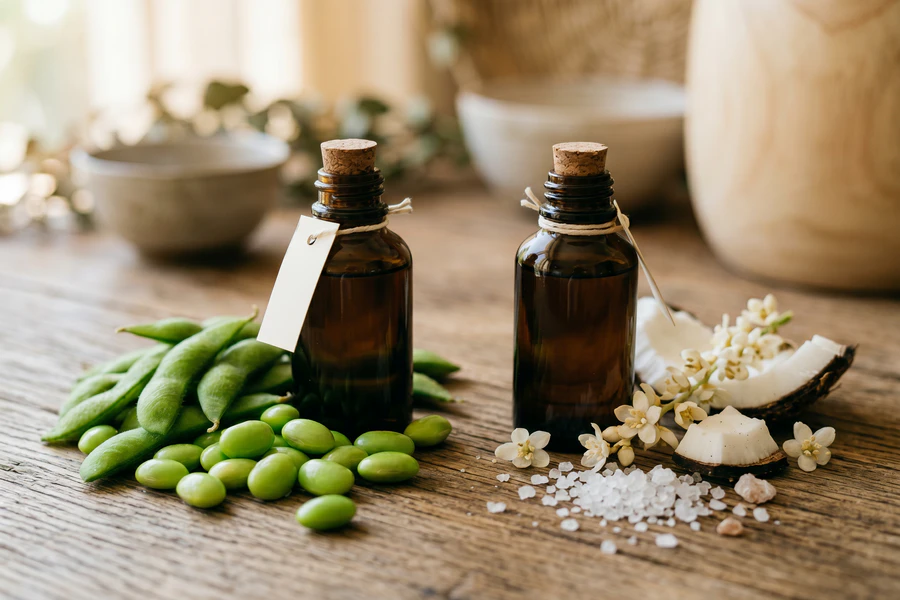
Liquid amino acids are a concentrated seasoning sauce made from soy or coconut protein. In appearance, they resemble soy sauce: a dark liquid with a rich, salty-umami flavor. The production method, composition, and properties, however, are fundamentally different.
Soy Liquid Amino Acids
Soy liquid amino acids are produced through acid hydrolysis. Soybeans are soaked in a hydrochloric acid solution, which breaks down the protein into free amino acids. The process takes one to three days — considerably faster than the traditional fermentation of soy sauce, which can take several months to half a year. Result is a light liquid with a mild, slightly sweet umami flavor. The ingredient list contains only soy protein and water — no wheat, no preservatives, no artificial coloring.
Coconut Liquid Amino Acids
Coconut amino acids are made differently — through the fermentation of coconut blossom nectar with sea salt. Their flavor is softer and sweeter than soy-based versions. Sodium content is roughly 60% lower, which makes them an attractive option for anyone monitoring salt intake. Since they contain no soy, they are also suitable for people with soy allergies and those following a paleo protocol.
How Liquid Amino Acids Differ from Soy Sauce
Soy sauce is produced by fermenting soybeans together with wheat — which is why it contains gluten. A small amount of alcohol also forms during fermentation. Liquid amino acids, by contrast, are not fermented and contain neither gluten nor alcohol. Their flavor is gentler: less sharp, with a touch of sweetness, closer to tamari — the Japanese sauce made from pure soybeans without wheat.
One practical note: soy liquid amino acids and soy sauce contain comparable amounts of sodium when measured by equal volume.
The history of liquid amino acids begins in the early twentieth century. Paul Bragg, an American naturopath and one of the earliest advocates of healthy eating, developed a soy seasoning free from synthetic additives and promoted it as an alternative to conventional sauces. The product quickly became a fixture in health food culture — first among vegetarians and whole-food enthusiasts, then with a much wider audience.
Amino Acids and Protein: What Is the Difference?
Protein is a long chain of amino acids linked together in a specific sequence. Muscles, enzymes, hormones, and immune cells are all built from protein. When protein enters the body through food, the digestive system breaks it down into individual amino acids — and those are what the body uses as raw material.
In total, the body requires 20 amino acids. Eleven of them it can produce on its own — these are called non-essential. The remaining nine must come from food — these are essential amino acids. A deficiency in any of them directly affects tissue repair, hormone synthesis, immune function, and energy levels.
Soy liquid amino acids contain 16 amino acids; coconut amino acids contain 17 — including both essential and non-essential. That said, one important clarification is needed here.
Liquid Amino Acids Are Not a Protein Source
In cooking, liquid amino acids are used in very small amounts — a teaspoon, two at most per dish. That is far too little to meet the body’s daily protein or amino acid requirements. Their role in the kitchen is something else entirely.
Think of liquid amino acids as the conductor of a flavor orchestra, not the orchestra itself. Their job is to draw out and unify the flavors in a dish — to make simple food taste deep and satisfying. It is the free glutamic acid in their composition that creates umami: that sense of fullness and roundness that people associate with restaurant cooking.
Daily protein needs are met by other foods: meat, fish, eggs, legumes, nuts. Liquid amino acids are a functional seasoning, not a nutritional supplement. That distinction matters — it prevents confusing a culinary product with sports amino acid complexes, which are covered in the next section.
Myths About Heat and the Stomach
A few persistent misconceptions surround liquid amino acids. Both stem from the same concern: will the beneficial properties be destroyed — during cooking, or in the stomach? Here is what the science actually says.
Myth One: High Temperature Destroys Amino Acids
This misconception arises from a confusion between two distinct processes — protein denaturation and amino acid degradation.
When protein is heated, its structure unfolds. This is called denaturation, and it is exactly what happens when egg white turns from clear to white during frying. Denaturation changes the shape of the protein, but it does not destroy its nutritional value — in fact, it makes digestion easier.
Amino acids are already the end product of protein breakdown. They are considerably more stable than intact protein molecules. To actually destroy an amino acid molecule, temperatures above 200°C are required. In ordinary home cooking, those temperatures are never reached: soups and sauces simmer at 100°C, braising happens at 80–95°C. Adding liquid amino acids to a hot dish, therefore, leaves their properties fully intact.
Myth Two: Stomach Acid Destroys Amino Acids
The reasoning behind this myth is intuitive: hydrochloric acid in the stomach is aggressive, so surely it destroys everything that enters. In reality, the opposite is true.
The stomach is designed precisely to break complex proteins down into free amino acids. That is its direct function. When already-free amino acids from a liquid seasoning arrive in the stomach, they simply skip the long digestion step and are absorbed quickly in the small intestine. In this case, stomach acid is not an obstacle — it is just a neutral transit point.
Culinary and Sports Amino Acids
The word “amino acids” can mean a seasoning for soup in one context, or a sports supplement for post-workout muscle recovery in another. These products may look similar on the outside, but their purpose, dosage, and logic of use are entirely different.
Culinary Liquid Amino Acids
These are a condiment. They are added to food in drops or teaspoons for flavor — umami, depth, saltiness without excess sodium. At those quantities, there is no meaningful nutritional contribution. Culinary amino acids come in small bottles with a dropper, sit on the shelf next to soy sauce and tamari, and are stored in the pantry.
Sports Amino Acid Complexes
These are a different matter entirely. Sports amino acids are designed for one purpose: delivering nutrients to muscles as quickly as possible. They are taken before or after training in precisely measured doses counted in grams. Speed of absorption is their primary advantage. That is why they are taken separately from food — mixing them with a meal slows absorption and defeats the product’s main purpose.
Why They Should Not Be Confused
Adding a sports amino acid complex to a soup slows its absorption. It also strips the product of its key benefit. Think of it like buying a sports car and driving it through rush-hour traffic. The fuel burns, but the potential goes nowhere.
The reverse does not work either. Culinary amino acids will not meet a sports protein need. The volume used in a dish is simply too small. These are two different tools for two different jobs. And that is precisely where biohacking begins: the right product in the right place.
Benefits in the Kitchen
Liquid amino acids have earned their place in the kitchen not through marketing, but through genuinely useful properties. Here is what makes them a valuable tool for conscious cooking.
Deep Flavor Without Excess Salt
The umami effect of liquid amino acids comes from free glutamic acid. This is the same molecule responsible for the rich flavor of tomatoes, parmesan, and mushrooms. A small amount intensifies the taste of a dish so naturally that the urge to reach for the salt shaker simply fades. Coconut amino acids contain roughly 60% less sodium than soy sauce. That makes them a meaningful choice for anyone managing blood pressure or following a low-sodium diet.
Gluten-Free and Preservative-Free
Liquid amino acids contain no wheat, making them completely gluten-free. This is a fundamental distinction from traditional soy sauce, which requires wheat as part of its production. Additionally, culinary amino acids contain no sodium benzoate or other chemical preservatives commonly found in commercial sauces.
Umami Reduces Appetite
Research suggests that eating umami-rich foods before a meal reduces hunger and decreases the desire to snack. The mechanism involves activation of brain regions associated with self-regulation when faced with food. This makes liquid amino acids not just a flavor tool, but also a gentle way to manage appetite — without restriction or deprivation.
Suitable for a Wide Range of Diets
Liquid amino acids are naturally vegan, contain no animal products, and fit most dietary protocols. Soy amino acids are certified kosher. Coconut amino acids work well for those following a paleo approach who avoid legumes. In Ayurvedic nutrition, umami is associated with activating Agni — the digestive fire responsible for the quality of nutrient absorption. For more on Ayurvedic nutrition by dosha, see the article “Eating for your Dosha: Gut Health and Digestion Trough Ayurveda”.
How to Use Liquid Amino Acids
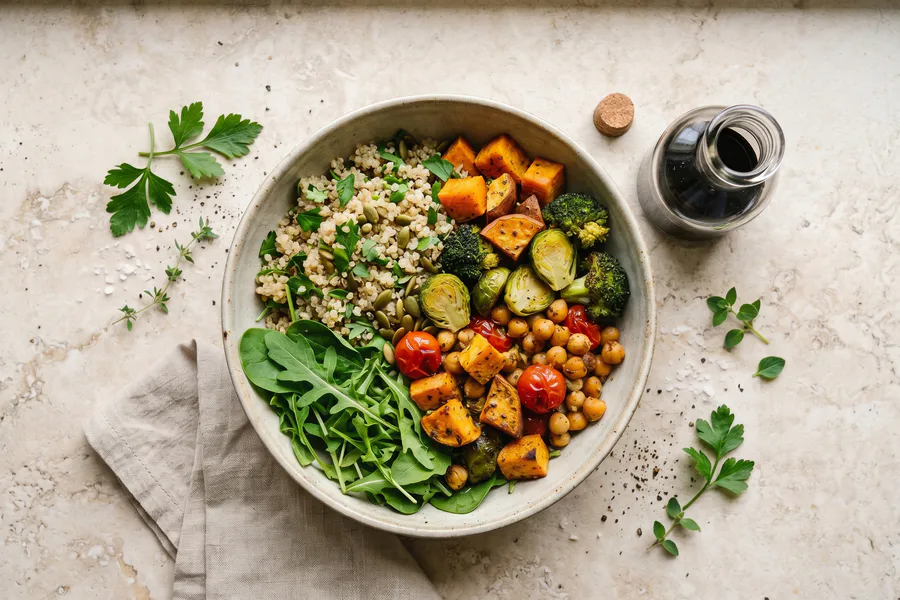
Liquid amino acids are versatile. They fit into most dishes wherever depth of flavor is needed. A few drops change the character of the food without any extra effort.
In Hot Dishes
Liquid amino acids can be added to soups, stews, and sauces. At the end of cooking or directly into the bowl. As discussed above, heat is not a concern, so they can go in at any stage. A few drops into a vegetable broth transform it from simple to deeply satisfying.
In Marinades
Liquid amino acids work beautifully in marinades for tofu, tempeh, fish, or meat. A basic marinade — olive oil, garlic, ginger, a splash of liquid amino acids, and lemon or lime juice — needs just 15 to 30 minutes to give the ingredient a rich umami depth.
In Dressings and Sauces
A teaspoon of liquid amino acids in a salad dressing replaces salt and adds complexity. It pairs well with sesame oil, rice vinegar, and a touch of honey — creating an Asian-style dressing that works with green salads, noodles, and vegetable bowls.
As a Finishing Seasoning
Liquid amino acids can be used just like soy sauce as a final touch. Drizzled over roasted vegetables, stirred into rice or quinoa. A small amount brings a dish to a satisfying finish.
Quantities and Storage
A standard serving is 1 to 2 teaspoons per dish. It is best to start with less and adjust to taste. An opened bottle of soy liquid amino acids keeps in a cool, dark place. For 3 to 6 months. Coconut amino acids, once opened, are best stored in the refrigerator.
Who Should Be Careful
Liquid amino acids are safe for most people. A few considerations are worth keeping in mind, however.
Soy Allergy
Soy liquid amino acids are made from soybeans. Therefore, they are not suitable for anyone with a soy allergy. In that case, coconut amino acids are a full substitute. They contain no soy. Moreover, they deliver a similar umami effect with significantly less sodium.
Sodium Monitoring
Soy liquid amino acids are made from soybeans. They are not suitable for anyone with a soy allergy. Coconut amino acids are a full substitute in that case. They contain no soy. The umami effect is similar, but with significantly less sodium.
Thyroid Conditions
Soy contains isoflavones, which in large regular amounts may affect thyroid function. In the context of a culinary seasoning — a teaspoon in a dish — the quantity is negligible. That said, people with thyroid conditions may want to consult a doctor. If they plan to use soy-based products regularly.
Pregnancy and Breastfeeding
There are no specific contraindications for using liquid amino acids as a seasoning during pregnancy or breastfeeding. As with any dietary change during this period, it is always worth discussing with a healthcare provider.
Conclusion
Kitchen biohacking starts with understanding how simple tools actually work. Liquid amino acids are heat-stable and well absorbed. They are also compatible with most dietary protocols. In addition, they are easy to incorporate into everyday cooking. The soy version delivers a classic umami flavor.
The coconut version, meanwhile, offers a milder, lower-sodium profile.
Used thoughtfully, liquid amino acids make healthy food genuinely delicious. No extra salt, no gluten, no synthetic additives.
This article is for informational purposes only and does not constitute medical advice, diagnosis, or treatment guidance. Before making changes to your diet — especially if you have chronic conditions, allergies, or are pregnant — please consult a doctor or registered nutritionist.
Related Posts

Neurosensory Therapy: Brain Biohacking Without Pills for Anxiety, Depression, and ADHD
Contents Introduction What Is Neurosensory Therapy Audio-Visual Entrainment (AVE) Vibroacoustic Therapy Binaural Beats and Brainwave…

Seasonal Depression: What a Lack of Light Does to the Brain and How Biohacking Can Help
Contents Introduction What Is Seasonal Depression Why Light Is Missing: The Biochemical Mechanism The History…

Light Deprivation: Why You Are Tired, Low, and Gaining Weight
Contents Introduction Light as a Nutrient: What Happens in the Cell How Light Controls the…