
What Aromatherapists Actually Treat: The Truth About Essential “Oils”
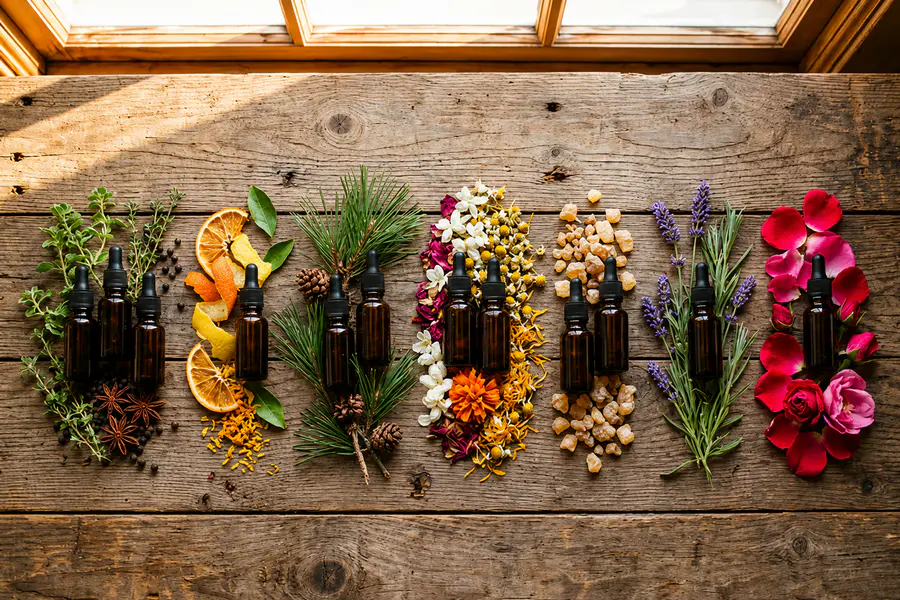
Aromatherapy is currently classified as alternative medicine. But that is a familiar story for anything truly groundbreaking. Penicillin went through the same journey. So did vaccines. Give it a couple of decades — and aromatherapists will have their own clinics. The waiting list will be longer than your GP’s. Because essential oils are natural medicine that works on the body, mind, and energy all at once.
Why Essential Oils Are Not Actually Oils
Let’s start with a paradox. Essential oils are not oils. They get the name from their oily texture. But they leave no greasy residue and evaporate within minutes. Most of them are also not safe to consume in their undiluted form.
In essence, they are the concentrated benefit of a plant. That benefit is extracted using pure steam and becomes a liquid when cooled. Scientists call them volatile biochemical compounds. They break down easily into molecules, releasing phenols and other components the body needs.
Essential oils are fat-soluble. So they are blended with carrier oils or cream. This accelerates the absorption of active compounds at a cellular level. Because of their volatility, they make instant contact with the olfactory system. From there, they regulate brain function and trigger regenerative processes throughout the body. There is no room for human error here — our internal system knows precisely what it needs and in what quantity.
How Specialists Classify Essential Oils
There is no strict academic classification of essential oils yet. Aromatherapy is still working its way toward official recognition. However, a practical approach has emerged among practitioners. Oils are divided by two criteria: the part of the plant they come from, and their psycho-emotional effect.
By plant part, we distinguish oils from herbs, seeds, petals, leaves and shoots, needles, roots, fruit and peel, bark and tree resin.
Since almost all essential oils are multifunctional, aromatherapy practitioners prefer to group them by psycho-emotional effect. It is simply more useful in practice.
Essential Oil Classification by Effect
Stress-relieving (adaptogens) — the largest group by far. Around 70% of all essential oils fall into this category. They help the nervous system adapt to stress more quickly. This includes lemon, rosemary, tea tree, patchouli, and all citrus oils. Peppermint and rosemary are the gentlest options. Leuzea is the most powerful adaptogen in this group.
Stimulating — these oils boost vitality and make waking up feel easier. They also sharpen focus and raise overall energy levels. All spicy oils belong to this category.
Stabilising — primarily oils from flower petals. They work directly with the emotional landscape and are particularly relevant for women. This group includes lavender, jasmine, ylang-ylang, and rose.
Relaxing — sandalwood, frankincense, lavender, chamomile. These are widely used in spa treatments and evening wind-down rituals.
Focusing — sacred oils and powerful mental tools. They help clear negative emotional noise. They also help attune the mind to higher-order thinking.
Aphrodisiacs — stimulate libido and support serotonin production. Vetiver and bergamot also have a calming effect on the brain. For this reason, they are often listed as relaxants as well.
doTERRA Essential Oils
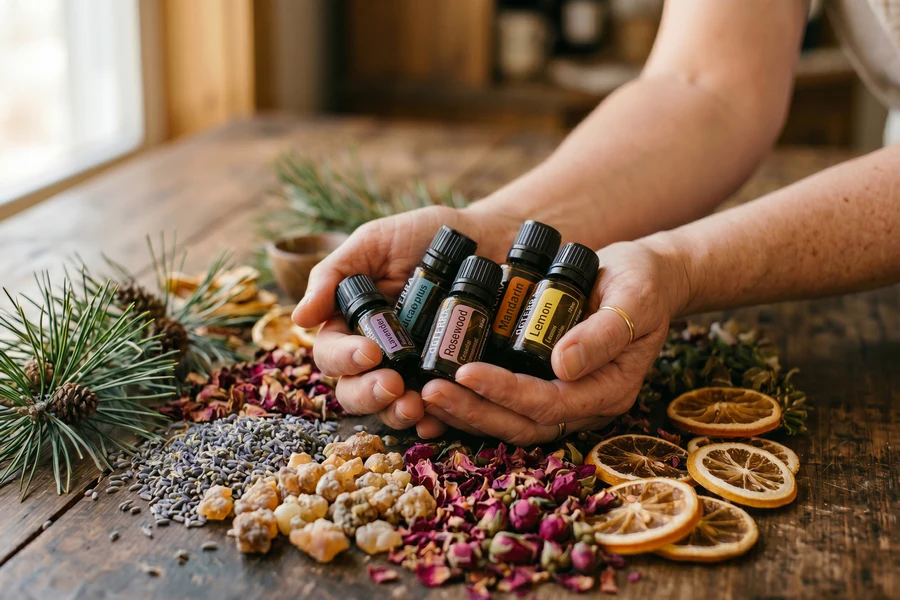
Leading therapeutic grade essential oil producer doTERRA organises its range into seven groups. It is a practical system that makes navigating a wide catalogue much easier.
Spicy — oils from herbs that have been used in cooking for centuries. Basil, clove, ginger, cardamom, cinnamon, turmeric, oregano, thyme, fennel, and others. They are often called “hot” oils for their warming effect. They are powerful antiseptics, antivirals, and antiparasitics.
Camphoraceous — oils from the leaves of trees and shrubs. Eucalyptus, rosemary, wintergreen, tea tree. The sharp camphor scent comes with broad-spectrum healing properties — from the mouth and gums to skin and muscle tissue.
Citrus — oils from citrus peel. Orange, grapefruit, lime, green mandarin, bergamot, petitgrain, and lemongrass. Most are cold-pressed rather than distilled. They contain monoterpenes, which deliver a strong toning and antiviral effect.
Coniferous — oils from evergreen trees. Spruce, cedarwood, cypress, fir, thuja, juniper. The pinenes they contain calm the nervous system and strengthen the body’s natural defences.
Masculine — these oils balance hormones regardless of gender. They support the body in producing the right amount of oestrogen and androgen. Vetiver, patchouli, basil, bergamot, ginger, cedarwood, sandalwood, and others. They are also beneficial for women — easing PMS and supporting hormonal balance during menopause.
Feminine — primarily oils from petals and leaves. Rose, chamomile, geranium, lavender, jasmine, ylang-ylang, melissa, neroli, clary sage, and others. Their main purpose is to harmonise female hormonal balance. They also build stress resilience and slow the ageing process.
Sacred — oils that have been used in religious and ceremonial practices for thousands of years. Myrrh, frankincense, sandalwood, cedarwood, copaiba, spikenard, myrtle, hyssop.
Beyond individual oils, doTERRA also offers blended formulas. Certain oils, when combined, multiply each other’s properties significantly. A single drop of the right synergy blend can address a whole range of concerns at once.
Aromatherapy is a system. Once you understand essential oil classification, the chaos of bottles on a shelf becomes a clear map. Every group is a tool with a specific purpose. The next step is learning how to choose a quality product. For everything you need to know — read our article How to Choose Essential Oils.
Related Posts
The hidden power of essential oils: aromatherapy as a path to inner harmony
In a world where people increasingly seek answers within themselves, essential oils are becoming not…
Aromatherapy: An Ancient Practice of Self-Discovery and Healing Through Essential Oils
Aromatherapy is not simply a wellness trend — it is an ancient healing practice tested…
How Essential Oils Are Made: From Field to Bottle
The essential oil market is vast — from cheap options in drugstores to bottles with…